Monday, April 28, 2025

Sermon for Easter 2: "Shalom"


+ 2nd Sunday of Easter – April 27th, 2025 +

Series C: Acts 5:12-32; Revelation 1:4-18; John 20:19-31

Beautiful Savior Lutheran Church

Milton, WA


In the Name of the Father and of the + Son and of the Holy Spirit. Amen. 


When you hear the word “peace” what comes to mind? Perhaps that word brings with it a frustration, something that’s just out of reach, like when Bob Dylan sang, “The answer is blowin’ in the wind.” Or perhaps the word peace comes with a more of a sense of longing like when you listen to Louis Armstrong sing, “what a wonderful world.”


John’s gospel gives us a little window into what was going through the disciples’ mind when Jesus appeared, alive again that first Easter evening and came and stood among his disciples and said, “Peace be with you.” 


The disciples were afraid. And who could blame them. They’d been through a lot in the last few days. Jesus’ arrest. Judas’ betrayal. Peter’s denial. The guards. The religious leaders’ inquisition. Pilate. Roman soldiers. The horror and shame and cruelty of Jesus’ crucifixion. Their whole world was in chaos. Everything had come unraveled. Everything was falling apart. Nothing is as it should be. Look what they did to Jesus…we must be next, they feared.


And then into the category five hurricane that was their thoughts and emotions and lives, steps Jesus. And he speaks a word and he calms the storm once again. 


“Peace be with you.”


Peace in the Scriptures, however, is more than a feeling. It’s God’s word of promise and presence in Jesus. Jesus would’ve spoken these words in Aramaic. The word is Shalom. It’s a blessing and greeting all at once. Shalom is order brought out of disorder. It’s also more than an end of war or hostility. Not just that the bombs stop dropping but that everything is rebuilt better than before. Not just an end of an argument with your friend but a reconciliation and renewed trust. Not just absence of hurt and pain and sorrow, but the presence of life and health and joy. It is harmony and wholeness and everything in its place. It’s Jesus saying, now that I’m crucified and risen… “all is well” despite the disciples thoughts and feelings to the contrary. 


When Jesus speaks “Peace be with you” he’s bringing order to his chaos-filled, disordered disciples. When he speaks his word and shows them his wounds he reassures them that all is well, that everything that had fallen apart was restored, renewed, reconciled. 


On that first Easter night, the disciples needed Jesus’ word of peace. Some denied him, others ran; were afraid and in hiding. Even after hearing the women’s eyewitness report: “He’s risen!” Even after seeing the empty tomb. They were still afraid. Locked behind closed doors. Disbelieving. But notice how Jesus speaks to his disciples in the midst of their disordered, chaotic, fearfulness. 


He doesn’t push them away or dismiss them. He doesn’t put a quota or a limit on his grace and promises. He speaks peace into their fearful hearts. He gives peace in the midst of their chaos. And not just once but repeatedly. Again and again. And again a week later when Thomas was with the rest of the disciples.


When he had said this, he showed them his hands and his side. Then the disciples were glad when they saw the Lord. 21 Jesus said to them again, “Peace be with you.”


Jesus didn’t leave his disciples with a one-time peace, or a temporary, one-and-done kind of peace, but his crucified and risen peace that is never-ending. 


This is how our Lord is with us too. Slow to anger and abounding in steadfast love and peace. Afterall, the disciples aren’t the only ones in need of Jesus’ word of peace. So are we. 


While our circumstances in life are different than the disciples that first Easter evening, we’re not all that different. Our lives are often a constant tornado of fearfulness, doubt, and worries. Disordered by sin and living in the chaos of guilt and shame. Too often, like the disciples, our lives and relationships are shattered by what we’ve done. Hurt and pain we’ve caused. Like the disciples our own sin has so chaotically disordered life that we are frozen in fear…fear of what we’ve done and what we’ve left undone. Fear of death and the grave. Like the disciples who saw the death of Jesus, the death of others around us – close friends, beloved family members – it leaves us broken and undone. All of this leaves us feeling as if life itself is falling apart. We wonder is there any hope or help or peace to be found.


There is and it’s here in the words and wounds of Jesus. As he said to his disciples he says to you today. “Peace be with you.”


The same Lord who came and stood with his worried, scared, disbelieving disciples in that upper room stands in our midst today to speak and deliver and pour out his peace upon you. The peace of sins forgiven and the peace of all is well in Jesus’ dying and rising for you. The peace of Jesus death and resurrection that washes away your sin, and makes you God’s own dear child. The peace of Jesus’ body and blood that forgives sin, and heals you in body and soul. The peace of absolution that declares Jesus peace is greater and far more gracious than even your greatest sin and shame. Jesus’ word of peace is a word that wipes away guilt and makes you clean.


“Peace be with you.”


For all the wounds caused by our sin… Jesus was pierced for our transgressions; he was crushed for our iniquities;upon him was the chastisement that brought us peace, and with his wounds we are healed.


For all the times we have caused chaos and disorder by our sin, in our lives and the lives of others, our Lord brings order and reconciliation by his dying and rising. for now in Christ Jesus you who once were far off have been brought near by the blood of Christ.  For he himself is our peace


For we who fear sin, death, and the grave, our Lord who died in our place, entered the tomb and walked out again three days later declares to you…“Fear not, I am the first and the last, and the living one. I died, and behold I am alive forevermore, and I have the keys of Death and Hades.” 


“Peace be with you.”


Jesus’ words are more than a feeling. Jesus’ peace is his promise. To be with you in the storm until it passes. Until the day of true shalom when all is well and made new in the resurrection of the body and the life everlasting. Until that day…


may the God of peace who brought again from the dead our Lord Jesus, the great shepherd of the sheep, by the blood of the eternal covenant, 21 equip you with everything good that you may do his will, working in us[b] that which is pleasing in his sight, through Jesus Christ, to whom be glory forever and ever. Amen. (Hebrews 13:20).


In the Name of the Father and of the + Son and of the Holy Spirit. Amen.

Tuesday, April 22, 2025

Sermon for Maundy Thursday: "An Edible Covenant"

 + Maundy Thursday - April 17th, 2025 +

Series C: Jeremiah 31:31-34; Hebrews 10:15-25; Luke 22:7-20

Beautiful Savior Lutheran Church

Milton, WA


What Baptism and the Lord's Supper Teach Us about Redemption and Art —  Center For Baptist Renewal


In the Name of the Father and of the + Son and of the Holy Spirit. Amen.


When God visits and delivers his people he makes a covenant with his people. Not a contract, as in…you do your part and he does his part. No. A covenant isn’t a contract. It’s a promise. It’s a gift. It’s God doing all the heavy lifting for you. It’s a one-sided salvation that we didn’t see coming and didn’t deserve but he does it anyway.


When God delivered Noah and his family through the flood, God made a covenant…and not just with Noah, but with all creation. He put his bow in the sky. He made a promise. When the rainbow is in the cloud, then I will look at it, to remember the everlasting covenant between God and every living creature of all flesh that is on the earth.


When God promised to deliver Abraham and make him the father of nations and that all nations would be blessed through the promised seed…a promised son, God made a covenant. In flame and fire, God passed through the sacrifice of blood and flesh that he made…and all while Abraham slept, by the way. “Now look toward the heavens and count the stars, if you are able to count them.” And He said to him, “So shall your [i]descendants be.” Then he believed in the Lord; and He [j]credited it to him as righteousness.


When God rescued Israel from slavery in Egypt, delivered them through the Red Sea and drowned Pharaoh and his armies, he met Moses at Sinai and once again made a covenant with his people. This time, God carved his covenant in stone tablets. “I am the Lord your God, who brought you out of the land of Egypt, out of the house of [a]slavery.


When God established the reign of King David he also made a royal covenant with David. The Lord also declares to you that the Lord will make a house for you. 12 When your days are finished and you [c]lie down with your fathers, I will raise up your [d]descendant after you, who will come from [e]you, and I will establish his kingdom. 13 He shall build a house for My name, and I will establish the throne of his kingdom forever.


And when the Lord called Jeremiah his prophet to speak of his coming deliverance, that’s right, you guessed it, he made another covenant. A promise. “Behold, days are coming,” declares the Lord, “when I will make a new covenant with the house of Israel and the house of Judah, 32 not like the covenant which I made with their fathers on the day I took them by the hand to bring them out of the land of Egypt, My covenant which they broke, although I was a husband to them,” declares the Lord.33 “For this is the covenant which I will make with the house of Israel after those days,” declares the Lord: “I will put My law within them and write it on their heart; and I will be their God, and they shall be My people. 34 They will not teach again, each one his neighbor and each one his brother, saying, ‘Know the Lord,’ for they will all know Me, from the least of them to the greatest of them,” declares the Lord, “for I will forgive their wrongdoing, and their sin I will no longer remember.”


When God visits and delivers his people he makes a covenant with his people. It’s no different when God takes on flesh and blood to save us. Once again he makes a covenant. A promise. A gift. Only this time the promise isn’t found in the flesh and blood of a beast, but in the flesh and blood of God himself who once again makes a covenant with and for his people. A one-sided action that we don’t deserve but Jesus gives it to us anyway. Not a contract, but a covenant. Not something we do for God but something he does for and gives to you. a promise. A gift. A new testament in his body and blood. A new covenant of bread and wine and body and blood. 


And when He had taken some bread and given thanks, He broke it and gave it to them, saying, “This is My body, which is being given for you; do this in remembrance of Me.” 20 And in the same way He took the cup after they had eaten, saying, “This cup, which is poured out for you, is the new covenant in My blood.


Once again, just as it was for Noah, Abraham, Moses, David, and the prophets, all the action is on Jesus’ side of the table. Jesus takes bread in his hands. Those hands that wiggled on Mary’s lap. Those hands that healed the sick. Touched the leper. Raised the dead. Jesus breaks the bread as he did for thousands on the hillside. Jesus gave it to his disciples, as he gives it to us on this day and every Lord’s day. This is my body, given for you. And with the same hands that shaped the rivers and formed the waters and turned water into wine, he takes a cup of wine and declares his solemn promise to you. “This cup, which is poured out for you, is the new covenant in My blood.


For we who are sin-sick, here is the medicine of immortality. Food of the new creation come into the old.


For we who are dead, here is Living Bread from heaven. True manna in the wilderness.


For we who are poor beggars, here is a sacred treasure from the Son of David.


For we who are lonely, here is the communion of saints as we are numbered among Abraham’s offspring by grace through faith in Jesus, the Promised Seed.


For we who are attacked by the devil, here is a trusty shield and weapon.


For we who are hungry, here is life-giving food for body and soul.


For we who are thirsty, here is a cup of blessing overflowing with Jesus’ forgiveness.


For we who are faint and weak, here is strength and sustenance for the journey.


For we who are emptied of all self-righteousness, here is Christ’s righteousness that satisfies you with good things.


For we who are Adam’s cursed descendants, here is the flesh and blood of Christ that redeems us from the curse.


For we who have troubled consciences, here is consolation and peace. 


For we who are the Church on earth, here is the pulsating heart of the Gospel where heaven comes to earth. 


Here in the Lord’s Supper, in this covenant of Jesus’ body and blood given and shed for you, Jesus is doing all the heavy lifting for you. It’s his promise. Pure gift. Unfiltered, boundless grace. A covenant of deliverance for you. When God visits you, as he does on this holy day, he brings you his holy covenant for your deliverance, forgiveness, and life. 


A blessed Maundy Thursday to each of you…

In the Name of the Father and of the + Son and of the Holy Spirit. Amen.                

Sermon for Good Friday: "The Hands of the King"

 + Good Friday – April 18th, 2025 +

Isaiah 52:13-53:12; Psalm 22; Hebrews 4:14-16, 5:7-9; John 19:1-19:42

Beautiful Savior Lutheran Church

Milton, WA


How Nails in Jesus' Hands Provide Authority of the Believer - John |  Fountain of Life Christian Center


In the Name of the Father and of the + Son and of the Holy Spirit. Amen.
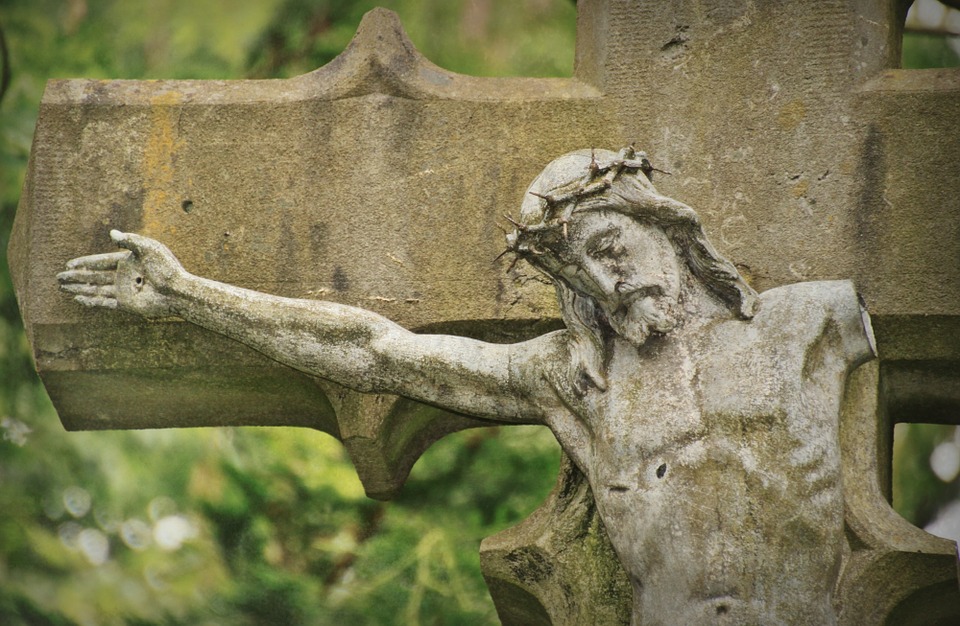
 

Our hands can tell us a lot about each other. Are we married, engaged, or single? Do our jobs include manual labor or typing at a keyboard? What type of hobbies do we enjoy or instruments do we play? Every speck of dirt under the fingernails, callous, scar, wrinkle, and line has a story to tell. 


If hands tell a story, what story do the hands of Jesus tell? 


There’s an old story that foretells the coming of a king with a prophecy. The hands of the king are the hands of a healer. And so the rightful king could ever be known (J.R.R. Tolkien. The Lord of the Rings, New York: Houghton Mifflin, 1994, p. 842.)


The hands of the king are the hands of a healer. The same can be said when it comes to Jesus' hands. For the hands of our King are the hands of healing and they tell the story of our salvation. 

When you look at the hands of Jesus, you know the kind of King you have because you know what this king has done. And in his hands, you are brought eternal healing.  


These are the hands of our incarnate God, who was conceived by the Holy Spirit and born of the Virgin Mary, bone of our bone, flesh of our flesh, and hand of our hands.


These are the hands of Jesus, the God-man who wiggled his newborn fingers, grabbed his mother's hair, and clinched his infant fists.


These are the hands that matured as he grew in wisdom and stature and in favor with God and man (Luke 2:52). Hands covered in the sawdust of Joseph's workshop. Hands calloused as he learned the carpenter's trade. Hands lifted up in prayer to the Father as he was tempted by Satan to use his hands for selfish, self-serving purposes.


These are the hands that touched the sick, the dying, and the outcast and brought mercy, healing, and restoration. Hands that broke bread. Hands that touched dead corpses and restored them to life.


These are the hands that washed his disciples' grungy, gritty feet. Hands that healed a man's ear in Gethsemane. Hands lifted up in prayer again to the Father. "Father, if you are willing, remove this cup from me. Nevertheless, not my will, but yours, be done" (Luke 22:42).


These are the hands that bore the wood of the cross. Hands that were fastened by Roman spikes to a cruel tree. Hands that writhed in pain. Hands that went limp when he breathed his last. Hands with wounds by which we are healed. Hands with victory scars.


"Glad songs of salvation
are in the tents of the righteous:
The right hand of the Lord does valiantly,
the right hand of the Lord exalts,
the right hand of the Lord does valiantly!"
 (Ps. 118:15-16)

When Jesus appeared again to his disciples on that first Easter evening and again a week later with Thomas and the Emmaus disciples, what did Jesus show them? His hands. 


"Peace be with you. Why are you troubled, and why do doubts arise in your hearts? See my hands and my feet, that it is I myself. Touch me, and see. For a spirit does not have flesh and bones as you see that I have." And when he had said this, he showed them his hands and his feet (Luke 24:39-40).


For his disciples and for you, every scar, wrinkle, and line on Jesus' hands has a story to tell. And that story is this: The hands of our incarnate, crucified, risen, and ascended King are the hands of a healer, and so shall your rightful King be known. 


This Good Friday, Jesus' hands still have a story to tell. When our hands are soiled with sin, when they tremble and fail us from living in this fallen world, remember in whose hands you rest. And look to Jesus, the founder and perfecter of our faith, who for the joy that was set before him endured the cross, despising the shame, and is seated at the right hand of the throne of God. 

When you feel as if your hands can't grip or cling to God's promises, remember that we are the people of his pasture and the sheep of his pierced, crucified, risen, glorified hands. 


When your hands and whole body feel tired, worn out, and riddled with scars and disease - even when your hands are dead and buried - remember, even there, out of the grave, the hand of your crucified and risen King will reach out and deal valiantly again for you. Remember that the hands of Jesus the King are the hands of a healer, and by this, our rightful king shall be known.

Into your hands, O Lord, I commit my spirit.


A blessed Good Friday to each of you…


In the Name of the Father and of the + Son and of the Holy Spirit. Amen. 
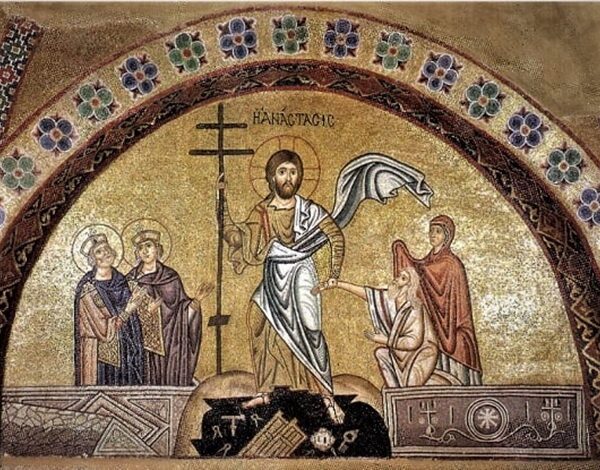


Sermon for the Resurrection of Our Lord: "Surprised by Easter"

 + The Resurrection of Our Lord – April 20th, 2025 +

Series C: Isaiah 65:17-25; 1 Corinthians 15:19-26; Luke 24:1-12

Beautiful Savior Lutheran Church

Milton, WA


The Freedom of the Resurrection | PEMPTOUSIA


Alleluia! Christ is risen! He is risen indeed. Alleluia!

In the Name of the Father and of the + Son and of the Holy Spirit. Amen.
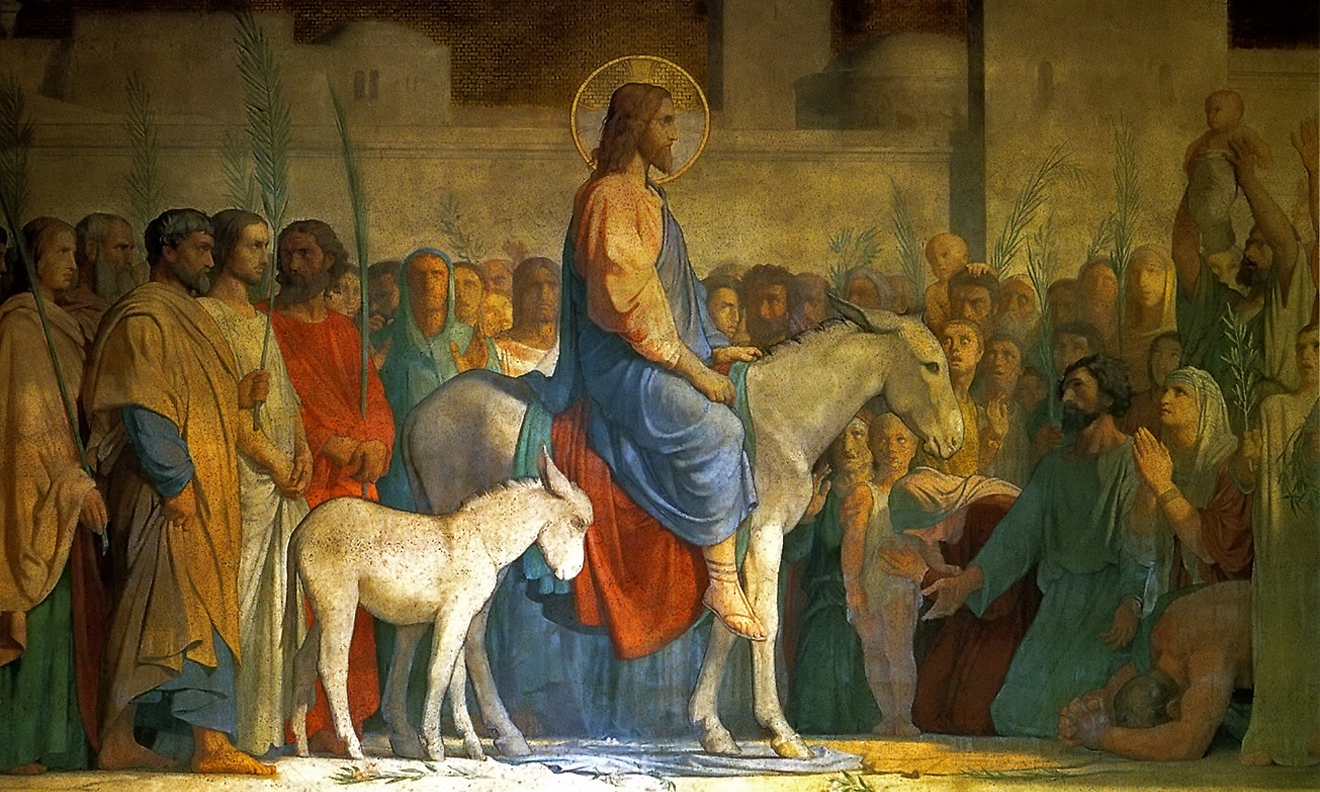
 

Not every movie or book can pull it off, but every once in a while you come across a good story that has a great plot twist or a surprise ending you didn’t’ see coming. Like the ending of Planet of the Apes where Charlton Heston falls on the sandy beach where the Statue of Liberty stands in ruins. Or when Luke Skywalker finds out Darth Vader is his father. Or when you get to the end of the Lego Movie and find out the whole thing has been taking place in a young boy’s imagination. 


Easter Sunday is that kind of story as well. It’s the story of a surprise ending we – and the women at the tomb and the disciples – didn’t see coming. It’s the greatest of all plot twists. A plot twist of grace and joy that sounds too good to be true. It sounds crazy. We all know dead men tell no tales. Except today one does. And it’s all true.


Because here’s the thing about this story. It isn’t science fiction or fantasy…and it didn’t take place in a galaxy far, far away. But in Jerusalem, nearly 2000 years ago, with eyewitnesses who saw Jesus crucified, dead, and buried on a Friday afternoon. This story happened in real human history for real people like you and me. A real death on a real cross for real sinners with real sin. A real burial in a real tomb for us all. And…spoiler alert. His tomb is empty. The stone is rolled away. Christ is risen.


And yet… this shouldn’t have been a surprise. Jesus had told his disciples many times exactly what he was going to do. Like Babe Ruth calling his homerun with an outstretched bat, Jesus told them he was going to be betrayed, handed over to the religious authorities, mocked and shamefully treated, then crucified, dead, and buried and on the third day rise again.


And yet, the women came on that first day of the week, at early dawn, to the tomb, taking spices they had prepared to finish Jesus’ burial from Good Friday. And yet, the disciples when they heard the women tell them the unexpected, joyous good news, thought it was an idle tale, a nonsense story, something too good to be true. 


They had forgotten that when it comes to God’s saving work, he is the king of the gracious and the unexpected endings. He is the author of more plot twists than any New York Times best seller. He has pulled off more surprise endings than anyone in history. 


This is the God who gave Abraham and Sarah the unexpected, promised son Isaac when they were old and barren. And now the Seed of Abraham has sprung forth with new life from the barren wasteland of the grave.


This is the God who spared Isaac on the mountain of sacrifice so that one day he could give his Son, His only-begotten Son as a sacrifice for the world on the mountain where he was crucified for you. 


This is the God who led his people Israel, with the abyss in front of them and Pharaoh’s hordes behind them, through the Red Sea on dry ground. And now this God in human flesh has made a greater exodus through death and out alive again three days later.


This is the God who swallowed up his prophet Jonah only to spit him out again on a beach three days later. And now the Greater Jonah has swallowed up death by his death and the earth has spit him out again in resurrected glory.


And today, the God of Abraham, Isaac, Moses, Jacob, and Jonah, reveals that he is still the God of surprise endings and plot twists of grace for you.


What did the women find when they came to Jesus’ tomb that first Easter morning? Something unexpected. A surprise ending they didn’t see coming. The expected to find the body of Jesus. But instead. They found the stone rolled away. And when they went into the tomb they did not find the body of Jesus. 


While they were perplexed about this, behold, two men stood by them in dazzling apparel. And as they were frightened and bowed their faces to the ground, …they witnessed the greatest surprise ending in all of history. They heard the announcement of the plot twist to top all plot twists that had come before and would come after. They heard the unexpected, yet gracious and joyous good news.


“Why do you seek the living among the dead? He is not here, but has risen. Remember how he told you, while he was still in Galilee, that the Son of Man must be delivered into the hands of sinful men and be crucified and on the third day rise.”


The women heard the word…and they remembered. Like that aha moment you have when you figure out your favorite surprise ending had been foreshadowed all along. Only now in the light of the resurrection does it all make sense though. Only through the word do the women believe. Only through the word do we believe as well. Jesus’ word does for us what it did for the women and his disciples. His word creates faith. That trust in his promise – he gives that…plants it like a seed and waters and nourishes it. He who worked the greatest miracle and surprise ending of them all – his resurrection from the dead – also works the great miracle of faith and trust in his word for you as well. And he does it the same way: from doubt and despair to peace and joy; from death to life.


You see, not only is Jesus’ resurrection the greatest surprise ending of the greatest story of all. This changes everything…and not just for the women and the disciples. But for you. 


This story is yours as well. Jesus’ death is yours. Jesus’ resurrection is yours. Jesus’ cross was for you. The punishment for sins was for you. His blood shed for you. His cry of “it is finished” for you. His burial for you. His rest in the tomb for you. His glorious resurrection for you. For as by a man came death, by a man has come also the resurrection of the dead. 22 For as in Adam all die, so also in Christ shall all be made alive. 


Because of Jesus’ death and resurrection the story of our lives ends with a plot twist of God’s grace as well. The story of your life doesn’t end in the grave. That’s only a resting place. Until that great and joyous day when Christ returns – as he promises – and calls out our name as he did for Lazarus and Jairus’ daughter and Ezekiel’s valley of dry bones. And then the angel will sound the trumpet on yet another surprise ending, the resurrection of all flesh. your resurrection in the body. Out of the grave and into the new heavens and the new earth. Out of this old creation and into a new creation. Out of this story of fallen and broken things and death and tears and into a never-ending story in the presence of our crucified and risen Lord. A story and kingdom and feast that has no end…and which goes on forever. In which every chapter is better than the one before. 


A blessed Easter to each of you…


In the Name of the Father and of the + Son and of the Holy Spirit. Amen. 

Monday, April 14, 2025

Sermon for Palm Sunday: "The Great Hosanna"

 + Palm Sunday – April 13th, 2025 +

Series C: John 12:12-19; Deuteronomy 32:36-39; Philippians 2:5-11; John 12:20-43

Beautiful Savior Lutheran Church

Milton, WA


A Messianic Triumphal Entry? | A Palm Sunday Reflection


In the Name of the Father and of the + Son and of the Holy Spirit. Amen.


There are certain words we use that when we say them we know exactly what day it is. Words which mark a momentous occasion. Baseball fans wait all winter to hear those famous words on opening day: play ball! Children go to bed with anticipation and restless energy on Christmas Eve waiting for those magical words the next morning: Merry Christmas! 


Palm Sunday is no different. Palm Sunday has a word that marks this momentous and joyous and holy day. It is a prophetic, yet personal word. A word filled with God’s presence and promise. It is a word packed full of salvation, which Jesus comes to bring as he enters Jerusalem. What is the Palm Sunday word? Listen to the crowds.


The next day the large crowd that had come to the feast heard that Jesus was coming to Jerusalem. 13 So they took branches of palm trees and went out to meet him, crying out, “Hosanna! Blessed is he who comes in the name of the Lord, even the King of Israel!” 


Hosanna is the Palm Sunday word. On Palm Sunday and every day after, whenever you hear that word – Hosanna – you’re brought back to this day. To the crowds. The cloaks on the road. The palm branches waving. The voices crying out. The Lord, Messiah, King, and Savior Jesus riding on a donkey. The Son of David come to rescue and save the sons of Adam and daughters of Eve. On Palm Sunday, Jesus enters Jerusalem amidst the crowds shouting Hosanna, even as he is the Lord of Hosanna. He is God the Father’s Great Hosanna come to save us.


For that is what his name and this word means. Jesus’ name is YHWH saves. Hosanna is another great Hebrew word: save us! Save us now! O Lord, save indeed! It’s a word of prayer and word of praise all at once. A crying out to the Lord to save and a shout of praise to the Lord who saves. It is a divine exclamation mark on everything Jesus has done and is about to do. 


Hosanna is also an old, ancient word. The Palm Sunday crowds didn’t just make this up on the spot. No. Hosanna is the word of prayer and praise found in Psalm 118. The very psalm sung by the crowds as Jesus enters Jerusalem. “Hosanna! Blessed is he who comes in the name of the Lord, even the King of Israel!” 


Hosanna is a messianic word. Back in Psalm 118 – the whole psalm is about the coming Messiah. The Coming One. Save us, we pray, O Lord!  O Lord, we pray, give us success! Blessed is he who comes in the name of the Lord!


Save us, Lord. Hosanna. 


Psalm 118 was also the psalm sung by pilgrims as they went up to Jerusalem for the feast of booths/tabernacles. During that feast, for seven days they would march around the altar once a day. And guess what word was sung? Hosanna. Lord, save us. And on the 8th day of the feast they marched around the altar 7 times and 7 times they said the holy word of prayer and praise…Hosanna. Lord, save us. This was known as the “Great Hosanna”. 


No wonder the crowds greeted Jesus with these words: “Hosanna! Blessed is he who comes in the name of the Lord, even the King of Israel!” 


Here he is at last. The Messiah foretold by the psalms and prophets. The Name of the Lord in human frame. The Lord of all and yet the God-man. David’s Son and David’s Lord. The King of Israel and our Royal Redeemer. Jesus is the Greatest Hosanna for he is the one who enters Jerusalem to do what this word cries out to God to do. Hosanna. Lord, save us. 


For the crowds are not the only ones who cry out: Hosanna. Lord, save us. So do we. As we sit in doctors’ offices awaiting uncertain test results, we cry out, Hosanna. As we look at our own families with broken relationships, broken marriages, broken lives…we cry out, Hosanna. Standing by the graveside of a loved one or a close friend, through our tears…we cry out, Hosanna. Weighed down by our guilt and haunted by our shame and finding no help when we look to ourselves…we cry out, Hosanna. Does our Lord hear us, we wonder? Does he care? Will he rescue? Will he save? Will he Hosanna? 


Jesus answers the crowds’ cries for rescue and our own Hosannas with another word of prophecy and promise and his peace. 


“Fear not, daughter of Zion;
behold, your king is coming,
    sitting on a donkey's colt!”


Jesus’ entrance into Jerusalem is God’s promise that all our Hosannas do not fall on deaf ears, but rather fall on the ears of him who hears your cries for mercy and rescue and who is himself the answer and deliverance we so desperately need. Fear not. Your King is here. Today on a donkey. And soon, on the cross. Today shouts of Hosanna. Soon, shouts of crucify. Today the palm branches. Soon, the wood of the tree and the hyssop branch and the crown of thorns. Today Hosanna. Soon, the Greatest Hosanna of them all. 


For there on the cross God answers all our cries for Hosanna, Lord save us, with his own cry of “it is finished.” 


Today we join the Palm Sunday crowds in that word of prayer and praise: Hosanna. Lord, save us. Knowing he has. He does. He will. 


Today we join the festive crowds of Psalm 118 as we come around his altar to receive the Great Hosanna – the Lord save us – in his body and blood. Blessed are you who come in the name of the Lord.


Today our Lord gives us a word that he keeps and answers without fail. Hosanna. Lord, save us.


A blessed Palm Sunday to each of you…


In the Name of the Father and of the + Son and of the Holy Spirit. Amen. 

Tuesday, April 8, 2025

Sermon for Lent 5: "Honor in the Son"


+ 5th Sunday in Lent – April 6th, 2025 +

Series C: Isaiah 43:16-21; Philippians 3:8-14; Luke 20:9-20

Beautiful Savior Lutheran Church

Milton, WA


Summary of Research on the Parable of the Wicked Tenants | Greg Lanier


In the Name of the Father and of the Holy Spirit. Amen.


One of the things you learn when you travel is how different other places are in their cuisine, customs, and culture. Like the time Natasha and I accidentally offended a Canadian customs officer when we told her we weren’t sticking around Victoria for the Canada day fireworks (which we had only just learned about that moment!). No doubt you’ve experienced something similar in your travels. 


Now you may not have realized it but whenever you open up the Scriptures you’re traveling across time – no, not in a Delorean or a time machine disguised as a police box – but we’re taken back to a culture that was (and for many parts of the world still is) very different from ours. Many countries in the West – like ours – tend to operate or think in the categories of guilt and innocence, individual rights, a longing for things to be made right, and so on. 


But that’s not every culture tends to think in those categories. And that was certainly the case in Jesus’ day. It’s not that guilt and innocence were unimportant – they were and are – but some cultures, like the kind Jesus lives in and we read in the New Testament tend to think along the lines of honor and shame – where respect and reputation and relationships are valued and where disgrace, dishonor, and disrespect hurt not only an individual but the community.


Today’s parable in Luke 20 is a good example of the different ways cultures operate or the categories in which they think. A man planted a vineyard and let it out to tenants and then went away to another country for a good long while. When the time came to gather the fruit harvested by the tenants they beat the vineyard owner’s servants, sent them away empty-handed, treated them shamefully, wounded, and threw them out of the vineyard. Then comes the strange part – at least to our ears. The man decides… What shall I do? I will send my beloved son, perhaps they will respect him.


This is where we usually scratch our heads or do a face-palm. I mean, really. What did this guy expect? Those tenants are thugs. They’re guilty. We expect the vineyard owner to storm into that vineyard like John Wick or Chuck Norris. But instead he sends his beloved son. And here’s one of those cultural differences and why it helps understand what’s going on here.   


This story is told by Biblical scholar, Ken Bailey, where, writing about the cultural ideals of Jesus’ day he tells a story from Jordan in the 1980s when the king of Jordan, Hussein bin Talal, had been trying to make peace. This was not popular with the generals in his army. So word came to him that seventy five of them were meeting at one of the army barracks in order to hold a coup, and take over the country. So, the king got into a helicopter, and had the pilot fly him over to the barracks. As he got out, he told the pilot that if he heard gunshots, to take off without him. He went down to where they were meeting, walked calmly in, and said something to the effect of, “If you carry out this coup, the country will be torn apart by civil war. Tens of thousands will die. There is no need. Here I am. Only one need die today.”


To be sure, all seventy five of them were guilty. All seventy five had brought shame upon their office. Yet by this one action, the king appealed to their sense of honor, and gave them an honorable way out of this. Every single one of them took it. They all rushed up to him, pledged him their loyalty, and served him faithfully for the rest of their days. This was the outcome King Hussein bin Talal expected. That’s why he went. 


And that was the outcome the hearers of Jesus’ parables expected too. The tenants had acted shamefully. They had disgraced and dishonored the vineyard owner and themselves. But the vineyard owner showed just how honorable he was by giving them the opportunity to have their shame taken away. Receive the son. And the transgressions against the vineyard owner through his servants are all forgiven. The relationship and honor and joy would be restored.


But of course, that’s not how the parable goes is it. Not so much. But when the tenants saw him, they said to themselves, ‘This is the heir. Let us kill him, so that the inheritance may be ours.’ And they threw him out of the vineyard and killed him. Instead of honor, they choose violence and shame upon shame. Instead of being restored and at peace with the vineyard owner they reject him and his beloved son. 


What then will the owner of the vineyard do to them? 16 He will come and destroy those tenants and give the vineyard to others.” When they heard this, they said, “Surely not!” May it not be. Let it not happen the crowds said. And yet it was happening. Jesus’ parable was playing out right in front of them. As Jesus spoke these words Israel’s religious leaders – the tenants of the Lord’s vineyard of Israel – were plotting murder and bringing shame upon shame. Jesus spoke these words during Holy Week…hours away from the time that he, the beloved Son of the Father, would be thrown out of the vineyard and killed. Crucified. Cast out. Rejected. Shamed.


But this, of course, is Jesus’ purpose in this parable. He’s telling us all what’s taking place. What is written? Jesus says. “‘The stone that the builders rejected has become the cornerstone’? Everyone who falls on that stone will be broken to pieces, and when it falls on anyone, it will crush him.”


In one shameful act upon another, the religious leaders Jesus is speaking about in this parable will crucify in the most shameful death imaginable…death on the cross. And yet it’s not their shame alone that puts Jesus on the cross. It’s Adam and Eve’s shame after they disobeyed God’s word and ate. It’s our shame. Yours. Mine. All of us together. It’s our shameful sin that rests on Jesus. It’s our rejection that he bears. It’s our disgrace and dishonor that he dies in. 


And yet, that’s not the end of the story. The Stone rejected becomes the cornerstone. In Jesus’ rejection. In his shame and crucifixion and dying for you, there is your salvation. There is your glory. Where the Beloved Son, Jesus, is cast out of the vineyard and killed, there’s your honor and restoration.


Jesus is treated shamefully to cover your sin and shame. Jesus is rejected to restore you to a place of honor. Jesus is made to be the guilty one to declare you and cover you with his innocence. Jesus is broken so you are made new. Jesus goes to his death to bring you his life. 


The author of Hebrews puts it this way: Jesus, the founder and perfecter of our faith, who for the joy that was set before him endured the cross, despising the shame, and is seated at the right hand of the throne of God.


But he’s not alone there. For the Beloved Son, Jesus, raises us up from the ash heap, out of sin and shame, to give us a seat of honor at his banqueting table. And the Lord of the vineyard pours out his sacred blood for wine and his body for the feast. A feast of joy and honor and forgiveness for you. Today, tomorrow, and forever.


In the Name of the Father and of the Holy Spirit. Amen.