Monday, March 16, 2026

Sermon for Lent 4: "Creation and Redemption"

 + 4th Sunday in Lent – March 15th, 2026 +

Series A: Isaiah 42:14-21; Ephesians 5:8-14; John 9

Beautiful Savior Lutheran Church

Milton, WA
 

Healing the Blind Man by Yongsung Kim – Christ.org


In the Name of the Father and of the + Son and of the Holy Spirit. Amen.


In the beginning, God created the heavens and the earth. 


In the beginning was the Word, and the Word was with God, and the Word was God.

The earth was without form and void, and darkness was over the face of the deep. And the Spirit of God was hovering over the face of the waters.

He was in the beginning with God.  All things were made through him, and without him was not any thing made that was made.  In him was life, and the life was the light of men. The light shines in the darkness, and the darkness has not overcome it.


And God said, “Let there be light,” and there was light. 


As long as I am in the world, I am the light of the world.


The Book of Genesis and the Gospel of John may be separated by hundreds of pages in your Bible. But in truth, they are neighbors. More than that. Twin storytellers giving us good news of the same gracious God at work in both places. Moses and John are both musicians in God’s orchestra playing the same piece of music. 


So which is it? The story of creation or redemption? Sometimes it seems hard to tell. And that’s the point. Call it divinely inspired, sanctified plagiarism. Holy Scripture is full of it.


Genesis and John are singing in harmony. Painting in unison. They’re stories are not two separate acts of God, but one. God creates, by his grace in Christ. God redeems and saves, by his grace in Christ. God the Creator is also God the crucified one.


God’s work of creation and redemption are two sides of the same coin. The God who creates out of nothing by his eternal Word is also the God who is the Word made flesh and gives life out of nothingness. The God who graciously creates the world out of love, also graciously recreates and rescues us in the love of His Son Jesus crucified and risen. The God who said “let there be light” says with the same authority: “Arise. Be of good cheer. Your sins are forgiven.”


The Word of God who created the world in six days and rested on the 7th, is the same Word of God incarnate who saves the world in three days, takes his Sabbath day rest in the grave, and rises again to a new day, an 8thday. An endless day. A dawning day of a new creation.


That’s why in beginning of John’s Gospel he takes us all the way back…in the beginning. So we see Jesus’ saving work and his creating work – not as separate works – but one continuous story of his good and gracious work of new creation. God who gives you bodily life, lays down his life to give you eternal life in body and soul.


This is what’s happening when Jesus sees the man born blind. Jesus approaches him. Just as in the first word (and every word) of creation is his initiative. So it is here. 


Jesus, the Light of the World. The Word through whom light and life first came into existence, brings a dawning new day to a blind beggar. An eternal Sabbath is at hand. God’s new creation arrives.


And in the strangest of ways, at least by our reckoning. Jesus clears his throat. Fills it with saliva. And spits on the ground. Jesus takes his drool-drenched dust of the earth and forms it. The Potter goes to work with clay once again. Jesus is re-Genesising this blind man. Giving sight where there was blindness. Light where there was only darkness. Life where there was death and nothingness.


Jesus takes an old page out his divine playbook. Word. And water and earth. Dust. Mud. Clay. The stuff of his creation. And he mixes them all together. A merciful mashup. The Word who in the beginning formed Adam from the dust of the earth. Who breathed life into his lungs. Who formed man from the clay. Now brings sight to a blind man all by his word, water, and the dust of the earth. He uses mud and clay to restore this man’s sight. And fill him with the life of his new creation.


Creation and Redemption. Two sides of the same coin. Two chapters in the same story. Two wondrous works of our good and gracious God. And not only in Genesis. Not only in John’s Gospel. Not only for the blind beggar.


But for all of us, you and me, fellow beggars. This blind man leads us who are blind to the one who restores. Redeems. Rescues. Reconciles. And re-creates.


And our Lord Jesus does this for all of us beggars the same way he did for the blind beggar. Jesus speaks. The Word made flesh gives his word. Takes water - the stuff of his creation – and washes us over our dry, dusty, earth-bound flesh and bones. And he re-Genesises you. The Spirit who hovered over creation splashes down into the water and word of you Baptism. Awake, o sleeper and rise from the dead, and Christ will shine upon you.


We were blind. Now, by God’s grace we see. We were in darkness. No…deeper than that. We were darkness. Now, by God’s grace you are light and life in the Lord. We were dead. Not just a little dead. Stinking, rotting, hanging with the worms kind of dead. But now, now you are alive. For Christ has brought you out of death into life, by his dying and rising for you.


God who created every tree for you, is the God who is nailed to a tree and crucified for you.


God who brought forth life out of darkness, also hangs in the darkness of Good Friday on the cross to bring forth your life out of his death for you.


God who said, “Let there be light” in the beginning, fills you with light and life and new creation by his resurrection.


God who worked his spit into the mud of his creation, takes his body and blood places it into the bread and wine for your forgiveness. For your redemption. 


God who created the world in 6 days. Who dies and rises to save you and the world in 3 days. Saves and forgives and redeems and makes you his new creation in three words. I baptize you. 


Creation and Redemption. They both rest in the hands of Christ crucified and risen for you.


In the Name of the Father and of the + Son and of the Holy Spirit. Amen.

Monday, March 9, 2026

Sermon for Lent 3: "Living Water"

 + 3rd Sunday in Lent – March 8th, 2026 +

Series A: Exodus 17:1-7; Romans 5:1-8; John 4:5-26

Beautiful Savior Lutheran Church

Milton, WA


10 1/4" Jesus and The Samaritan Woman at The Well Icon Greek Orthodox Icon  26cm | eBay


In the Name of the Father and of the + Son and of the Holy Spirit. Amen.
 

In the beginning of C.S. Lewis’s book, The Magician’s Nephew, Digory and Polly discover magic rings in his uncle’s house. Being children naturally, they try them on. They’re transported to a woods between worlds: their own and countless others. The doorway to those other worlds is found in surrounding pools of water. Endless wells that bring them into new worlds.


What satisfies our imagination in this narrative world points to the truth of Christ’s incarnation in our own world. 


When Jesus meets the Samaritan woman at the well in John 4 he brings to her and Samaria and Sychar – to outcasts and outsiders of all backgrounds – a well that opens up into a new world. A well of living water brimming with endless, eternal life.


“If you knew the gift of God, and who it is that is saying to you, ‘Give me a drink,’ you would have asked him, and he would have given you living water.” 


When Jesus meets us in Lent he does the same. He meets us on the road: weary. Worn down. Thirsty. Parched. Empty. Skin and bones, body and soul – aching. Creeking. Dry. Dusty. Dead bones. 


And then suddenly, an oasis. Jesus draws near. Jesus the well-digger, the fountain, the wellspring delivers a well that brings you and me into a new world.


And he does it all by water and word. Wood and nails. Blood and sweat. A rock solid promise that gushes forth good news in the wilderness: living water for thirsty sinners.


Jesus too was thirsty. Here at the well. Later on the cross. Thirsty, yet always satisfied in doing the Father’s will. 


The Samaritan woman was thirst too. For something more, for something true, for something lasting, for something good; for what she doesn’t really seem to know…at least not till the end when Jesus opens the wellspring of salvation for her. Only then she confesses: he the Messiah. He told me everything. She gushed this good news all over town.


Where do you get that living water? 12 Are you greater than our father Jacob? Oh, he most certainly he is. Greater than Jacob. Abraham. Isaac. Moses. Noah. Adam. Eve. Jesus is the great Reservoir of Redemption. The mountain Spring of Salvation. The Well overflowing with God’s grace and goodness. 


And yet, he who is the holy watering hole – Christ the rock for Israel. Christ the well for this woman and for you – is also very much like us.


Jesus was thirsty. So was the Samaritan woman. So are you.

You and I thirst, not just for water. We thirst in body and soul. St. Augustine was right, “Our hearts are restless, O Lord, until we find our rest in Thee.” 


Being restless. Thirsty. We search and seek. 


But the thirst isn’t really our problem. No, the problem goes deeper than the well of Sychar. Deeper than the depths of the sea. The problem is where we go with our desires and longing. Our hearts are a swamp. A cesspool. Murky and muddy waters. 


Where can we find our thirst quenched, in what satiates or the one who truly satisfies? The problem is for us as it was for Israel in Exodus. In the wilderness. the wasteland. We thirst and long for satisfaction in all the wrong wells. We drink and drown our sorrows in selfish desires. We tip the glass for gulp of sin. It’s little wonder we thirst. That we find ourselves empty. Dry. Parched. Walking in the wasteland. In our eyes, ears, hearts, and minds we drink in poison expecting to be healed. We guzzle the ocean waves expecting to be satisfied. We drink from a tap that draws straight from the sewer and we expect not to get sick. 


We’re the deer panting for flowing streams of water. We’re Israel grumbling in the wilderness. We’re the Samaritan woman sitting by the well with Jesus. And we wonder. Is there a well that is clean and good and holy? Lord, give us this kind of water. Open up a well to a new world. Can we find water in the wasteland?


No. But Christ can. Christ does. Christ is. 


“Everyone who drinks of this water will be thirsty again, 14 but whoever drinks of the water that I will give him will never be thirsty again.[b] The water that I will give him will become in him a spring of water welling up to eternal life.” 


This well is not simply metaphor. Jesus is the well. Jesus is the rock. Jesus is the spring. 


In the wilderness, Jesus is the rocky fountain where water gushes forth for Israel.


In Samaria, the land of outsiders and outcasts, Jesus seeks and saves the lost in a water rescue welling up with eternal life for the Samaritan woman.


And for you. For you in the wasteland. For you parched and perishing of thirst in sin Jesus is the well. Jesus is the rock. Jesus is the living wellspring who gives living, eternal water.


You and I, like Israel and the Samaritan woman, live downstream from the cross. Downstream of God’s goodness and grace. Downstream from Jesus who is the wellspring of eternal life. Whose body was cracked open as the rock in Exodus. Only this time blood and water pour forth downstream.


Like that woman at the well, he sees us. Knows us. Sins and all. And still forgives. Always forgives. Forgiveness like an ever-flowing fountain. 


Today Jesus comes to you: to open up to you by his word and water a new world: an endless world of new creation.


To quench your thirst with his righteousness.

To satisfy your longing with his steadfast love.

To fill you who are empty with his holy body and blood. 


For… whoever drinks of the water that I will give him will never be thirsty again.[b] The water that I will give him will become in him a spring of water welling up to eternal life.


In the Name of the Father and of the + Son and of the Holy Spirit. Amen.


Monday, March 2, 2026

Sermon for Lent 2: "Resting in Grace"

 + 2nd Sunday in Lent – March 1st, 2026 +

Series A: Genesis 12:1-9; Romans 4:1-8, 13-17; John 3:1-17

Beautiful Savior Lutheran Church

Milton, WA


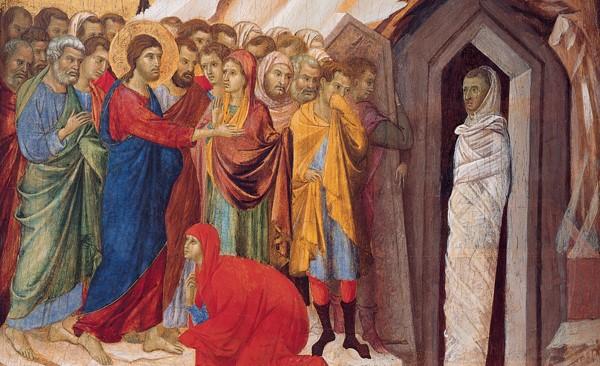
Nicodemus in the Bible Was a Seeker of God


In the Name of the Father and of the + Son and of the Holy Spirit. Amen.


When you or I make something we always need the right parts, ingredients, or materials before we begin. Cedar for woodworking. Yarn for knitting. Watercolors for painting. Lego bricks for building. And so on.


Not so for God. When God creates, he creates ex nihilo, out of nothing. 


When God reveals his saving love in sending Jesus he doesn’t ask for an assist. He doesn’t need our helping hands. Our Lord has no copilot. No assistant to the regional manager. 


When our Lord Jesus comes to our rescue everything he says and does for you – indeed, your entire life – rests on his grace. 


And when Paul writes of the righteousness that comes by faith. And when Jesus tells Nicodemus he must be born from above by water and the Spirit. This is nothing new. It’s as old as father Abraham. As old as creation. In fact, it’s as old as before the foundations of the earth: Whatever God does, he does it by grace. Jesus, and Paul following his master, are doing nothing new. 


From the dawn of creation with the first “let there be light” to the archangel’s trumpet on the Last Day, this is how God works: everything rests on his grace for you in Jesus.


God calls creation – which begins in darkness and void and nothingness - is into existence by the gracious, powerful Word of God. All of creation (even now and till the Last Day) rests on grace.


God calls Abram – a gentile, pagan, childless father – to a new country, the bearer of the promised Seed, the Offspring, the One through whom God would bless all nations. And for Abram it all rests on grace.


God calls the apostle Paul, formerly known as Saul the persecutor, to be a preacher of his Gospel. The Good news that to the one who does not work but believes in Him who justifies the wicked, his faith is reckoned as righteousness. For Paul all of life, body and soul. Rests on grace.


God calls Nicodemus the pharisee, who comes to Jesus by night, to a new birth and new life by water and his Spirit. Light and life in the Son who is raised up on the cross for Nicodemus and for us all. So that his faith, like ours, rests on grace.


And part of us – the new Adam and the new Eve, the baptized child and saint of God that we are – rejoices in this abundantly gracious giving God. Our new man delights in the good news that all we are and have. All of God’s promises in this creation and the new creation, they all, we all, rest in the grace of God in Christ.


But there’s another part of us, at least in this life, the old Adam, the old Eve, the sinful nature, that begrudges God’s graciousness. More than that. Finds it offensive. Scandalous. Too good to be true. And downright terrifying. Why?


Because when God does all the work, all the saving, all the giving his gifts of repentance and forgiveness, there’s nothing in our hands to bring. Nothing we can pat ourselves on the back for. Nothing we can take credit for or contribute. Oh, sure we contribute plenty. Plenty of sin. A plethora of trespasses. A steaming, dung-heap of filth and faithlessness…but that’s it. Everything depends on God’s grace. It’s out of our control. And this is what our sinful flesh finds so maddening. 


Because if there’s one thing our sinful flesh loves more than sinning (or being prideful that we aren’t all that bad of sinners); if there’s one thing we love more than loving ourselves; it’s living in the delusion that we are in control. Independent. Self-reliant. Captains of our own ships. Masters of our own destinies. True north on our own compasses.


And this, when we’re honest with ourselves. Honest with what God says to us in his holy word, this is terrifying. Humbling. Brings us to our knees. Falling on our faces.


This is why we have a season of Lent. A time where our Lord brings us into the wilderness for testing. Where our Lord calls us to a new land and new promises. To journey with Abraham, out of nothingness into his promise. To travel with Paul on the Damascus road and go from breathing threats and murder, to preaching grace and mercy. To sit with Nicodemus in the dark and hear the wildness of God’s grace wash over us. 


“Truly, truly, I say to you, unless one is born from above he cannot see the kingdom of God.”


And that’s the way out of the labyrinth. That’s the way our Lord called Abram to travel. The road Jesus sent Paul journeying down. The way he invited Nicodemus to walk upon. To take the paths of the dead. To walk into the grave with Jesus. To see that we are dead in trespasses and sin. Unalive and in need of a new birth. That we are dead men walking from the moment we’re conceived. That we’re wicked and ungodly as Paul says we are. And that we’re right there with Nicodemus in the dark, confused and struggling to believe that which sounds unbelievable. 


Is there a way out? Where’s our rescue? What hope do we have? How can these things be, we join Nicodemus in asking?


And Jesus’ reply is simple. There are not many ways, but one way. And one way only. One door. One narrow path. Into death. Through the grave. And made alive again in the resurrection.

St. Paul says it this way: For the promise to Abraham and his offspring that he would be heir of the world did not come through the law but through the righteousness of faith. 16 That is why it depends on faith, in order that the promise may rest on grace and be guaranteed to all his offspring

For Paul. For you. For me. It all rests on grace. And this grace is yours in Christ Jesus who gives life to the dead and calls into existence the things that do not exist.

Our Lord Jesus says it this way, so that you never forget: your life, faith, body and soul – all rests on grace. For as Moses lifted up the serpent in the wilderness, so must the Son of Man be lifted up,  that whoever believes in him may have eternal life. 

 “For God loved the world in this way, that he gave his only Son, that whoever believes in him should not perish but have eternal life.  For God did not send his Son into the world to condemn the world, but in order that the world might be saved through him.

In the Name of the Father and of the + Son and of the Holy Spirit. Amen.