Monday, July 20, 2026

Sermon for Pentecost 7: "The Sower"

 + 7th Sunday after Pentecost – July 12th, 2026 +

Series A: Isaiah 55:10-13; Romans 8:12-17; Matthew 13:1-9, 18-23

Beautiful Savior Lutheran Church

Milton, WA


The Parable of the Sower and the Seed -

In the Name of the Father and of the + Son and of the Holy Spirit. Amen.


When you travel through the Willamette Valley you’re suddenly surrounded by miles of fields of grass seed, hops, and hazelnuts. When you cross the Cascades into Central Washington you’re greeted by rolling hills of winter wheat, alfalfa, and barley. The scene is tranquil. Idyllic. 


And yet among the fields of barley lies a battlefield. Beneath those amber waves of grain a battle rages. It’s a battle against time. Weather. Scorching sun. Soil and nutrients. Invasive insects below. Devouring birds from above. Weeds. Thorns. Thistles.


In a broken, fallen world, gardening and farming are more than an act of bearing fruit and food. These vocations are an act of hope and faith. A righteous rebellion against the devil’s chaos and corruption of God’s good creation.


In other words, it’s a miracle anywhere, anytime, anything grows and gives life.


The same is true when we turn our eyes and ears to Jesus’ parable of the Sower.


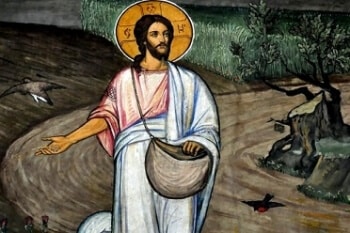
A sower went out to sow.


Jesus’ opening line is much more than descriptive storytelling; it’s a declaration of war. Jesus the Lion of Judah is one the move. The Kingdom of God in the flesh has landed and invaded his fallen creation; he’s come to bushwhack his way through thorns and thistles to save you.


And all the while he’s doing something good and gracious and unexpected. Wild even. The sower went out to sow.


Not in the perfect fertile Puyallup valleys. Not sparingly, not meagerly, not economically or efficiently. But prodigally. Abundantly. Graciously. Everywhere he went. Fists full of seeds. Hand after hand. Tossed out. 


The seed is the Gospel of the kingdom. In a word the seed is Jesus, the promised Seed. Ever since Genesis 15 (and before the foundations of the world), God promised to sow his seed. To send His Son. And the seed of Christ is sown generously and graciously from Adam and Eve down to the Virgin Mary, where the Sower sows himself into his own creation and steps foot on the farm where the battle rages, and where he will be victorious. 


Jesus is both the message and the messenger. He is the Word of God incarnate and He speaks the Word of God. He’s promised Seed and the Sower of the Seed of the Good News he bears and brings.


And yet, Jesus warns in his parable, not all is well on the farm. No sooner does the Sower sow his gracious seeds than they are surrounded on every side. Besieged. Embattled. 


The devil crows his murderous lies into our ears and eyes and hearts and minds, trying his damnedest to snatch and devour and destroy everything everywhere wherever and whenever he can. To sow discord and division and death where our Lord has sown concord and communion and new creation. And then there’s the rocky soil. Sin-hardened hearts. Shallow faith with roots only as deep as our own thoughts and emotions. There are thorns and weeds that creep into our eyes, ears, hearts and minds through our glowing screens, through the cares of this world, through the love of unfruitful and unalive idols, those made for us and those we make for ourselves. 


And it’s at this point of Jesus’ story that we might be tempted to sell the farm. Call it quits. In a broken world of weeds and thorns and rocky soil and where the devil crows his lies. Why not give up. Give in to despair. Lament that we’re not enough. There’s no good soil here.


And that part’s true. We’re not the good soil we think we are. Our hearts are a weed patch. Full of thorns and thistles. A rocky field. A stone-hard, death-cold dirt patch. You and I are not the good soil. That much is true. 


If anything is going to grow here, in us. If the word of God is going to take root and live and thrive. It’s going to be a miracle. 


So this is true as well. In fact it’s more true. Christ the Sower sows better life-giving seed than you do sin. Jesus is a greater, more generous and gracious Sower than you and I are sinners. 


Christ the Sower is also Christ the Savior and Christ the Sanctifier. He hallows the rocky soil into good soil. He makes your heart, ears, and mind fertile soil for the word of God to land, take deep root, and flourish. He plows and tills and turns over the dirt and plants and protects and gathers his harvest. 

He works repentance and forgiveness.

He buries us and makes us alive.

He takes our rocky heart of stone and makes us new, clean, restored, renewed, redeemed – holy ground. You, his holy people in his holy church are his victory garden. Rescued. Redeemed. Restored in his dying and rising. 


Miraculous? You bet it is. Unexpected? Absolutely. Gracious and good? That’s how our Lord loves to operate.


When the Sower steps forth into the field of this world he marches forth into battle for you. He speaks his word and gives you life. He raises the dead. Brings light out of darkness. Saints out of sinners. Resurrection out of the grave. Good fruit and a bountiful harvest out of thorns and thistles.


This is how Jesus still works. Hiddenly. Lowly. Humbly. In weakness of words and water. In the unexpected. Grain from the field which is grinded down into flour and made into bread that is his body. Grapes from the vineyard that are gathered, crushed, poured out as wine that is his blood.


Jesus is the Seed and the Sower, sown and planted within the womb of Mary. He became smaller than a mustard seed. So that he might grow and live for you and then be buried and planted in the earth for you, having laid down his life for you. And then out of the earth he rose for you to bring the fruit of his salvation for you. It’s all a miraculous, gracious gift from our good and gracious Sower and Savior.


In the Name of the Father and of the + Son and of the Holy Spirit. Amen.


Sermon for Pentecost 8: "Weeds and Wheat"

 8th Sunday after Pentecost - July 19th, 2026

Series A: Isaiah 44:6-8; Romans 8:18-27; Matthew 13:24-39, 36-43

Beautiful Savior Lutheran Church

Milton, WA


The Wheat and Tares Parable in the Social Media Age - Meridian Magazine  Meridian Magazine


In the Name of the Father and of the + Holy Spirit. Amen.


We’ve all had it happen before. You’re reading a book and your friend says, “oh isn’t that the story where so-and-so dies at the end?” Or you’re scrolling through social media and someone spoils the end of the movie you were excited to see. Spoiler alerts. They can be frustrating or maddening when it comes to our favorite stories. But sometimes there’s a blessing hidden in a spoiler.

God gives us spoiler alerts in Scripture all the time. Remember Genesis 3:15. In the midst of the fall of sin, Adam and Eve’s punishment, and curses, God delivers a promise. He tells us the end of the story. When you read the rest of Scripture, you read the story of salvation with this promise in mind, that Jesus, the Seed of the woman was born and crushed the serpent’s head in his crucifixion. 

When you know how a story ends, it changes how you see the rest of the story. This happens to be a good way of reading the parable of the weeds. Jesus’ parable calls our attention forward to the End, to his second coming in glory. Gather the weeds first and bind them in bundles to be burned, but gather the wheat into my barn. 

That’s End Times language. Jesus draws our ears forward to the Last Day. We long for this day. Pray for this day. Paul says that with creation, we groan eagerly awaiting the new creation and the redemption that comes in the resurrection of the body. We hear this parable and we long for the day when God will separate those who are declared righteous in Christ from everything and everyone who has rejected Christ’s righteousness. Come, Lord Jesus! Send your angels. Gather the harvest into your barn. Set right what is wrong once and for all.

Knowing this is how Jesus ends the parable changes how we see the rest of the story. So, let’s go back to the beginning.

 “The kingdom of heaven may be compared to a man who sowed good seed in his field, but while his men were sleeping, his enemy came and sowed weeds among the wheat and went away. So when the plants came up and bore grain, then the weeds appeared also.


As parables go, this one is fairly straight forward. Jesus gives us the interpretation. “The one who sows the good seed is the Son of Man. The field is the world, and the good seed is the sons of the kingdom. The weeds are the sons of the evil one, and the enemy who sowed them is the devil.


Still, there’s a tension in this parable, between the now and the not yet, between the present wicked weeds in the field near the good seed and the future harvest of that good seed and destruction of the weeds. When Jesus tells the crowds the focus is on the field and the weeds that have grown up next to the wheat. ‘Master, did you not sow good seed in your field? How then does it have weeds? He’s the Son of Man, he only sows good seed. He gives and creates life and faith. 

An enemy hath done this. Our Lord creates. The devil destroys. The Lord wants only to be gracious and merciful. The devil wants only chaos and death. Jesus sows good seed. The devil sows weeds. 

 For the crowds…the concern is on the ‘now’ part of the ‘now’ and ‘not yet.’ We get that, don't we? The devil plants his poison now. Sin and death surround us now. We see wicked weeds growing all around us, and even within us. And like the servants in the parable, we want our Master, Jesus, to do something about it. ‘Then do you want us to go and gather them? Ever wondered that? Why doesn’t God just do what he did in the flood, and wipe it all out again? Why doesn’t he go scorched earth and blow torch all the weeds?

Rest assured, our Lord knows what it’s like to live surrounded by wicked weeds. This parable is about his life and ministry too. He is the kingdom of God. Our Lord knows about all the weeds, and has done something about it. And promises to do more. But in the meantime, he reveals his compassion.

This is where the end of the story helps us see the whole thing more clearly. The sower doesn’t pull the weeds, not yet…lest in gathering the weeds you root up the wheat along with them. Because the sower cares for his wheat – because the Son of Man cares for you and all who believe in him – he does not uproot all the world’s evil and wickedness. Not only that, notice that the job of the final separation of wheat and weeds – of the righteous from those who have rejected Jesus’ righteousness – that job isn’t ours. That’s for the time of “not yet.” 

Does that mean we ignore sin? No. We live as faithful wheat of the Sower. We speak out against evil and wickedness in the world, and in our own sinful flesh. We call the world to repentance and forgiveness, and as we live in repentance and forgiveness. We live by the grace of Jesus the Sower, because we know the end of the story, the coming salvation, the “not yet” of the Last Day.

And yet, the Lord does not let sin, death, and the devil reign without consequence forever. A day is coming when this world will come to a close. The Lord’s angels will separate the wheat from the weeds, the faithful from the sinful, and there will be consequences. “The Son of Man will send his angels, and they will gather out of his kingdom all causes of sin and all law-breakers, and throw them into the fiery furnace. In that place there will be weeping and gnashing of teeth.” 

Scripture teaches us that Hell is real, as much as we may not like it. But remember, our Lord has no desire to send anyone there. Hell was prepared for the devil and his angels, not for humanity. And yet, Scripture clearly teaches us, if one persistently refuses faith unto the point of death, the Lord will give them what they want. 

But do not fear. You know the end of the story. Jesus Christ has taken all your sins away. Jesus gave his life to save you from destruction. Here in the now of this life, we live in patience and trust in Jesus the Sower. We know the end of the story. Our Lord Jesus endured the weeds. He wore the crown of thorns on his head. He withstood the torments of the evil one. And by the sons of the evil one was nailed to the cross. Jesus fell into the ground and died. He was planted in the tomb. He rose from the dead and produced a harvest greater than we could possibly imagine. He has paid for our sin. He has covered our shame. He has given us a place in His kingdom which has no end. 

Until that day, we know how this story ends, and it changes how we see everything.


In the Name of the Father and of the + Son and of the Holy Spirit. Amen.


Monday, July 6, 2026

Sermon for Pentecost 6: "Resting in Grace"

 + 6th Sunday after Pentecost – July 5th, 2026 +

Series A: Zechariah 9:9-12; Romans 7:14-25; Matthew 11:25-30

Beautiful Savior Lutheran Church

Milton, WA


Come to me, all you who labor and are burdened, and I will give you rest.”  — Matthew 11:28 In today's Gospel, Jesus extends a simple but profound  invitation: bring your burdens


In the Name of the Father and of the + Son and of the Holy Spirit. Amen. 


The futbol team that scores more than the other team wins the world cup. The student with the best GPA is the valedictorian of the graduating class. The best proposal at the business meeting gets the contract. This is the way of the world. 


It’s not the way of things in the kingdom of God, however. In the kingdom of God, we live by mercy, not merit. We live by grace, not entitlement. We live in Christ’s redemption, not the rewards of our own efforts. We live by Christ’s righteousness, not our own. We are not self-sufficient, but utterly dependent upon Jesus’ blood on the cross to save us. We live by the work of his hands, not ours. Instead of DIY righteousness, Jesus tells us to become more like little children…to be totally, completely, and utterly dependent upon him for everything.


“I thank you, Father, Lord of heaven and earth, that you have hidden these things from the wise and understanding and revealed them to little children…


This is the way of life in God’s kingdom. We live entirely by his grace and favor. 


In fact, the conflict that we see Jesus embroiled in throughout the Gospels comes as a direct result of the undeserved grace of God’s kingdom and salvation that he comes to bring in his dying and rising. 


It’s no wonder the scribes, Pharisees, chief priests – the religious authorities of Jesus’ day – are at odds with Jesus; they think the way of the world – of merit and law and rewards – is the way of God’s kingdom too. But it isn’t.


It’s no wonder they plot to kill Jesus. He completely upends their self-righteousness. He turns their world of works and law upside down. The religious leaders of Jesus’ day want the kingdom of God to come by merit, not mercy. By seeking righteousness in the Law, not in Christ who fulfills the Law. By the work of their own hands, not Jesus’ hands. 


Not so fast, says Jesus. My kingdom comes by mercy, not merit. By my hands, not yours. By my keeping of the Law, not yours. By my sacrifice for sins, not yours. By my labor and love, not yours.


“Father, Lord of heaven, thank you. Thank you for hiding the treasures of your kingdom from the wise and understanding who are so smart they think they don’t have anything to learn. Thank you for hiding your goodness and mercy from those who think they have you figured out. Thank you for hiding your wisdom under foolishness, your strength under weakness, your victory under defeat. Thank you for revealing these things to the little ones, to little children.” 


It sounds so opposite of what we would do or expect or deserve. And that’s precisely the point. God gives his kingdom to us this way, reveals his righteousness to us without us doing a blessed thing so that it rests entirely on his grace, in his hands, and on his mercy.


God hides the mysteries of the kingdom from the worldly wise and understanding. He reveals them to the little ones of faith. He uses the foolish to shame the wise. He uses the weak to shame the strong. He tucks the Mystery of salvation under the simplicity of baptismal water, pastoral words, eucharistic bread and wine.


Unlike fine wine and good cheese, sinners don’t really get better with age. The apostle Paul was probably in his fifties when he wrote his epistle to the Romans. He had been a Christian for over a decade. In Romans 7, Paul tells us what it’s like to have the mind of Christ and the flesh of Adam, to be simultaneously a sinner and a saint. The good he wants to do, he does not do. The evil he tries to avoid, he does. When he wants to do good, evil lies close at hand. 


“Wretched man that I am! Who will deliver me from this body of death?” And the only answer is this: “Thanks be to God through our Lord Jesus Christ.”


When our Lord Jesus reveals his kingdom and salvation, he does so entirely by his grace and favor. And it’s always by his undeserved grace to people who don’t deserve it and haven’t done anything to earn it. 


God’s love and kingdom and grace must be revealed t o us. Given to us. So that’s what Jesus did. Christ came to us. The Father sent the Son who was humbled under the Law for us, was put to death for us, bore our sin for us.


Jesus became the little one in our midst – lowly, despised, rejected. He embraced the little ones as pictures of faith not because they were innocent and sinless, but because they trusted, they received, they were open and teachable. 


And that is why it is good news when he says what he says to us today in Matthew 11… Come to me, all who labor and are heavy laden, and I will give you rest.  Take my yoke upon you, and learn from me, for I am gentle and lowly in heart, and you will find rest for your souls.  For my yoke is easy, and my burden is light.”


 “Come to me. Come to me, you weary and burdened, broken and miserable, anxious and despairing. Come to me, laboring under the Law, weighed down by the burden of your sin, Come to me where I have come to you. Come to me in Baptism where I make you an infant again. Come to me, in my Word, in the bread that is My Body, in the wine that is My Blood. Come to me, and I will give you rest. Take up my yoke, the yoke of childlike faith and trust in me. I bore your burden on the cross so that you don’t have to. Take my yoke upon your shoulders and I will be there with you.” 


When our Lord Jesus reveals his kingdom and salvation, he does so entirely by his grace and favor. And it’s always by his undeserved grace to people who don’t deserve it and haven’t done anything to earn it. Christ died for sinners…and you qualify.


That’s the way of life in the kingdom of God for us, his children…we live and rest in God’s grace.


In the Name of the Father and of the + Son and of the Holy Spirit. Amen. 


Wednesday, July 1, 2026

Sermon for Pentecost 4: "Something More Certain"

 + 4th Sunday after Pentecost – June 22nd, 2026 +

Series A: Jeremiah 20:7-13; Romans 6:12-23; Matthew 10:5, 21-33

Beautiful Savior Lutheran Church

Milton, WA


Quote/s of the Day – 10 September – Being the Lord's disciple – AnaStpaul


In the Name of the Father and of the + Son and of the Holy Spirit. Amen.


When I was in high school our family took a little road trip down from Portland to ride our bikes around Crater Lake. Now, these were the days before google and carrying supercomputers around in your pocket. All my sister and I had to go on was my dad’s description of the ride, which was sold to us like this: it’s just a few hills, and a lot of scenic views. 


Not quite false advertising…but pretty close. The reality was 35 miles that featured more than 6,000 feet of elevation change, and one nasty set of switchbacks that went for a few miles uphill. Had my father told us exactly the kind of suffering and sweat we were going to go through that day, we probably never would’ve left the parking lot.


The chambers of commerce do this kind of thing too. Come visit pure Michigan, they say, all while giving you gorgeous blue water views of the great lakes…in the 2 months of the year you can enjoy them without freezing your tuckus off.


So you’d expect that when Jesus sends out his 12 disciples in Matthew 10 that he would soften the blow for them a little. Numb the pain to come. A spoonful of sugar helps the medicine go down. 


But Jesus doesn’t do that at all. Jesus doesn’t spare his disciples the suffering. He doesn’t spin the reality of what they’ll endure. No. He does just the opposite. He leans into the suffering. He tells them every nitty, gritty, painful bit of suffering they’re about to endure. He’s not interested in giving his disciples a tourist brochure, but the truth.


Behold, I am sending you out as sheep in the midst of wolves. 


Brother will deliver over brother to death…children will rise against their parents and have them put to death.


You will be hated by all for my name’s sake.


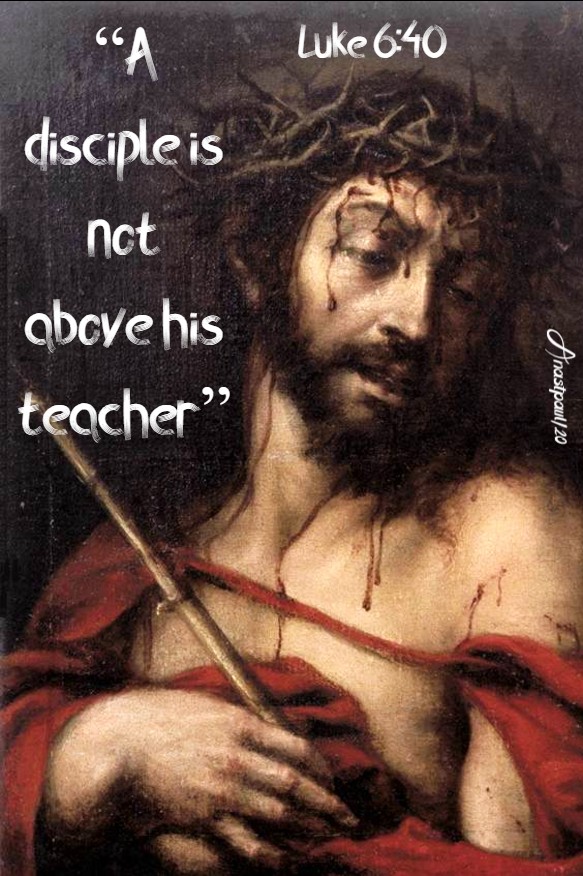
A disciple is not above his teacher, nor a servant above his master. If they call the master of the house Beelzebul (the devil) how much more will they malign those of his household.

One of the greatest miracles – and it is a miracle, a work that only happens by the Holy Spirit calling and sending – is that after hearing this, the 12 disciples actually go as Jesus sent them.

So what do we do with Jesus’ words when they grow dark and difficult?

The temptation is to soften them in hopes of making Jesus seem more friendly. Like your buddy, pal or homey. You know, water down Jesus’s words a little and maybe, just maybe, the world will hate you a little less or find the faith a little less offensive. But once you remove the suffering – especially the suffering of Jesus on the cross – you’ve gone like a horde of termites and hollowed out the faith.

Or there’s the temptation to ignore his words: out of sight out of mind. That doesn’t work for long because suffering – in one form or another, big or small – always comes along. Or there’s the temptation to avoid Jesus’ words. Don’t talk about suffering, sin, death and all that – instead talk about good things, happy things, living your best life now. But the problem is that platitudes only numb the pain for so long, and they certainly won’t save you when suffering for the sake of Jesus’ name comes along.

The instinct to avoid suffering is understandable. After all, no one these days puts suffering or persecution or even martyrdom for the faith of Jesus on our summer to-do list. Because when we suffer Satan and our sinful flesh fire a whole volley of temptations our way: before long we begin to think that God has abandoned us. That our Lord is absent, or even worse…that he’s apathetic to our suffering for his name. And then the devil and our sinful flesh whispers lies into the silence. We look for comfort and peace elsewhere, we look to someone or something other than Christ to ease our suffering, to numb the pain. And after that, the devil and your old adam turn right back around and wag their scaly, accusatory fingers at you in shame: if only you had a stronger faith, if only you had prayed harder, if only you were a better believer. 

Ever notice how all the devil’s lies begin with “if”. That’s what he does in our suffering: he sows uncertainty; he creates chaos, division, and lies. 

This is why Jesus speaks to his disciples, and to us this way in Matthew 10. This is why Jesus doesn’t hand his disciples a chamber of commerce brochure as he sends them out, but rather the brutal honest truth: the Christian life is a battle ground. Every moment. Every hour. Every day. From the day you’re baptized there’s a target on our backs and we’re hunted by the dragon and his minions. 

But that’s not all there is. There’s also a shield over you and surrounding you. It’s forged in the font with water, Jesus’ word, and the Holy Spirit. God places his holy name upon you: Father, Son, and Holy Spirit.

Yes, in the Christian life, suffering for the name of Christ is certain. But there’s also something in the Christian life that is even more certain: your salvation in Jesus who suffered for you. And who promises, “I am with you always, even to the end of the age.”

Jesus doesn’t avoid, or ignore, or soften the suffering that he knows is coming. Just the opposite. He embraces it. All of it. For you. His disciples’ suffering, persecution, martyrdom – he bears it all. Our brokenness, suffering and betrayals – he bears those too. All the hurt and pain and hatred the, we, along with, the world can throw at him – Jesus takes it all. He leans into the suffering. He lets the nails and spear and thorns pierce him – for you. He embraces the cross loaded with all our sin and suffering – and he does this for you. He is battered, bruised, beaten and bloodied – to save you. 

The Christian life is no travel brochure. Betrayal. Mockery. Hatred for Christ’s holy name will come. 

In your life in Christ, Suffering is certain. But fear not, for your salvation in Christ – even when you suffer – is even more certain. 

When the wolves are prowling at the door… know that they’re no match for the Lamb of God our Shepherd and Savior. He will endure you to the end.

In the Name of the Father and of the + Son and of the Holy Spirit. Amen.