Monday, August 24, 2020

Sermon for Pentecost 12: "Who is Jesus?"

 + 12th Sunday after Pentecost – August 23rd, 2020 +

Series A: Isaiah 51:1-6; Romans 11:33-12:8; Matthew 16:13-20

Beautiful Savior Lutheran

Milton, WA

 Jesus said to them, “But who do you say that I am?” Simon Peter ...


Grace, mercy, and peace to you from God our Father and from our Lord and Savior Jesus Christ. Amen.


In high school at Portland Lutheran, Mr. Thurman taught an elective for the school newspaper, teaching us the fundamentals of journalism: Who? What? Where? When? Why? And the bonus question - how? 


Those are good research questions for a news story. They’re also good questions to ask when reading the Scriptures. They’re same kinds of questions asked throughout Matthew’s Gospel.  “Are you the Coming One, or shall we look for another?”, John the Baptist asks. “Who is this that even the wind and waves obey him?”, his disciples ask. “Who is this who teaches with such authority?”, the crowd and critics ask.


Who is Jesus? That’s the question that’s been building like a tropical storm throughout Matthew’s Gospel. Only this time, Jesus leads the interview, man on the street style:


 “Who do people say that the Son of Man is?”


This is one of Jesus’ favorite titles for himself. It reveals his humility and his humanity, and his passion and suffering. The Son of Man came to seek and to save the lost.


Not surprisingly, the disciples give several answers. Like today, 1st century opinions about “Who is Jesus?” were like noses...everyone had one. “Some say John the Baptist, others say Elijah, and others Jeremiah or one of the prophets.” Others thought he would be a priestly or kingly figure. A warrior. The Son of David. Now, in a way, all of these Old Testament titles, offices, and expectations of the Messiah are correct, and are fulfilled in Jesus. That is, if viewed through the lens of Jesus crucified and risen for you and for the world. 


Like a good interviewer, Jesus asks his question a second time, more pointedly. Directly. He said to them, “But who do you say that I am?”  And now, we get to the heart of the question. Simon Peter replied, “You are the Christ, the Son of the living God.” 


Here’s the climactic moment. The revealing answer to the question that’s been burning in peoples’ minds since Mary’s stomach started showing over 30 years ago. Who is Jesus?


The Christ. Now, the Christ is not - like I thought in grade school - Jesus’ last name. It’s a title loaded with more Old Testament meaning than a mile-long freight train rolling through the Puyallup Valley. 

The Christ is New Testament language for the Old Testament word Messiah. The Anointed One. Priests. Kings. Prophets. They were all anointed in the Old Testament. Set aside for a holy purpose. The Messiah will restore, redeem, and rescue God’s people. 


Peter’s confession reveals that the prophet who is like Moses, only greater, has finally come, not in the burning bush but in the flesh and blood of Jesus. The true King of Israel and Son of David who will rule on an eternal throne is here. The great high priest to whom Aaron pointed has come as the atoning sacrifice for the sins of the world. It all happens in Jesus, the Christ. Son of Man and Son of the Living God. All God’s promises find their yes in Jesus.


Now, does Peter understand all of this yet? No, of course not. He and the rest of the disciples won’t get it until after Jesus’ crucifixion and resurrection. For it’s on the cross that Jesus reveals most fully how he is the Christ.


Still, Peter’s confession is glorious. And a divine gift. “Blessed are you, Simon Bar-Jonah! For flesh and blood has not revealed this to you, but my Father who is in heaven. 


This is how it is for all confessions of faith. For Peter. For you. For me. Faith and confession in Christ must be revealed to us. Given to us. Planted like a mustard seed. This is always God’s work. 


The other thing about a Christian confession is that it points away from ourselves - where we usually like to spend our time – to Jesus. This is one reason we confess one of the three historic Creeds of the church every Sunday. Confessions, like Peter’s, point us to Jesus crucified and risen. 


Then Jesus makes a promise. And I tell you, you are Peter, and on this rock I will build my church. 


It’s a word play between Peter’s name which means rock in Hebrew and the Greek word “rock.” “You are Rock, and on this rock I will build my church.” Jesus builds his church on this confession of faith and on Peter and the apostles who are called to confess this faith and preach this faith. Christ alone is the rock, the chief cornerstone. Everyone else is built on the rock of Christ. Just as Israel was cut from the rock of Abraham and hewn from the quarry of Sarah. By grace, God makes us the wise man who builds his house on the rock of Christ’s death and resurrection, not the sinking sand of our sin and folly.


Jesus promises more. The gates of hades shall not prevail against it. That’s a strange phrase in our ears. We hear it and think the gates of hell are on the offensive, but it’s the other way around. Gates are defensive. Gates are often the weakest point of a city or fortress. Breach the gates and you win. When it comes to Death and Hell, Christ is on the offense. 


This is what Jesus is anointed to do, to storm the gates of hell. The gates of death. In Jesus’ death, the gates of death will not stand against him. For he comes in the power of his life, death, and resurrection. His is a victory that destroys death. Death is utterly, completely defeated in Jesus dying and rising for you. On the rock of Golgotha and out of the rock of his tomb, Jesus has taken down the gates of Hades. Ripped them off their hinges. Trampled them underfoot. Death is dead. Done. Sin, death, and the devil hold no more power. Not over Jesus. And not over you. This is what Peter’s confession means. It is the confession of Jesus who overcomes death. And in Jesus, you overcome death as well. No matter how bad it looks in the world right now. 


And he who holds the keys of death, also opens the way to everlasting life for you. I will give you the keys of the kingdom of heaven, and whatever you bind on earth shall be bound in heaven, and whatever you loose on earth shall be loosed in heaven.” The cross of Christ is the key to paradise. Today. Death is swallowed up in victory. Today, heaven is open to you, and so is our Lord’s table, Today, Jesus, the prophet speaks his word. Today, Jesus the high priest prepares his sacrifice on the cross in a holy meal for you. Today, Jesus our king rules and reigns in bread and wine for your pardon.


Jesus is the Christ, the Son of the Living God, come to charge the gates of death to save you. That is who he is and what he has come to do for you.


In the Name of + Jesus. Amen.

The peace of God which surpasses all understanding will keep your hearts and minds in Christ Jesus. Amen.

Monday, August 17, 2020

Sermon for Pentecost 11: "Every Dog Has Her Day"

 See the source image

 + Pentecost 11 – August 16th, 2020 +

Series A, Proper 15: Isaiah 56:1-2, 6-8; Romans 11; Matthew 15:21-28

Beautiful Savior Lutheran

Milton, WA


Grace, mercy, and peace to you from God our Father and from our Lord and Savior Jesus Christ. Amen.

She was desperate. She had no one to turn to. Her daughter was deeply oppressed by some sort of demon. No description of the symptoms, but the woman is at the end of her hope. Jesus is all she has left. She heard He was coming into her region, the district of Tyre and Sidon, the far north coast county named after the great grandson of Noah. 


Problem is, she’s a Canaanite. Canaanites were Gentiles, idolaters, enemies of Israel and God. She knows a Canaanite woman has no business talking to a Jewish rabbi. Somehow, she knows Jesus can help. She’s heard the stories of his healing and miracles. So she comes with all boldness and confidence. “Have mercy on me, O Lord, Son of David...”

Strange words coming from the lips of a Canaanite. “Son of David” is Israelite talk. This is the language of the faithful expecting the promised Messiah. She has no right to address Jesus this way. 

But isn’t that how it is for us too? That we – who have no right to claim any favor from God - He gives us the right to be called sons of God. That’s the promise of Holy Baptism. We were gentiles, idolaters, and enemies of God. But then God throws us into the water, washes us, and gives us a new identity. We’re transformed and given the faith of Abraham. Children of the promise. Heirs with Christ. We pray Our Father in all boldness and confidence as dear children ask their dear father.

And though she has no right to do so, the Canaanite woman prays the same way. 

“Have mercy on me, O Lord, Son of David; my daughter is severely oppressed by a demon.”

Sin does the same within us too. Holds us hostage, captive. We are oppressed and enslaved. Sin is more than a flesh wound; it’s deadly and specific: As Jesus warned the Pharisees and disciples earlier in chapter 15, we’re defiled by the evil thoughts, murder, hatred in our hearts, adultery, lust, desire, sexual immorality, theft, false witness, and slander that come out of our sinful heart.


And what’s Jesus’ reaction to this Canaanite woman’s prayer? Silence. Perhaps that’s why the disciples ask him to do something. “Give her what she wants and send her away, Lord.” We’re not told why he’s silent. Jesus’ silence, however, is not his absence. Look what his silence reveals.

Jesus’ silence reveals his disciples’ embarrassment.  Either they’re embarrassed for the woman’s sake and want her quickly sent away. She’s a bother, a nuisance, oh, and a Gentile. Or perhaps they’re embarrassed by Jesus for not acting the way they think the Messiah should act. 


Jesus’ silence reveals something even deeper in the woman. She is persistent. So, Jesus breaks his silence: I was sent only to the lost sheep of the house of Israel. 


Still this Canaanite woman did not give up. Like Jacob she wrestles with God and will not let Jesus go without a blessing. She will not take Jesus’ silence for an answer. She comes closer. She falls at his feet. Touches her face to the dirt. She is humble. She worships Jesus as a lowly beggar before the great king. She speaks out of her brokenness. Lord, help me. 


We pray the same way. Lord, I am a sinner. I am a beggar. Apart from you I have no good thing. Lord, help me.

Jesus answered, “It is not right to take the children's bread and throw it to the dogs.” There’s no way to soften these words. It was no nicer to call someone a dog in the first century than it is today. It’s even more shocking that the woman agrees. 


Yes, Lord, yet even the dogs eat the crumbs that fall from their masters' table. Yes, Lord. I am a dog. Yes, Lord. I am a beggar. Yes, Lord; I am a sinner. She sees her own unworthiness. And yet she sees in Jesus something greater than her sin.


“Yes, Lord, yet even the dogs eat the crumbs that fall from their masters’ table!” (Matthew 15:27). Yes, Lord, even Rahab, the Canaanite, the prostitute, the Gentile, turned to the Lord for mercy and found it. Isn’t that Canaanite, Rahab, your own great-great-great-great-great-great-great grandmother? Yes, Lord, dogs don’t deserve to sit at the table with Abraham’s sons. But wasn’t Naaman, the Syrian, cleansed with water and healed, so others would know that a prophet was living in Israel?

Yes, Lord. You’re right about me. I am a poor miserable, mangy, mutt of a sinner. And yet He cleanses you from all sin. Your Baptism is a divine flee bath, washing away all your sin. 


This Canaanite woman catches Christ with his own word, and he is happy to be caught (Luther). She holds onto his words knowing that God’s business is feeding his people. She does not want the children’s bread. She wants food straight from the Master of the Table. 

I would rather be a doorkeeper in the house of the Lord than dwell in the tents of the wicked.

Better to be a dog in the house of the Lord than to be a chew toy for demons.

The Canaanite woman was content to receive a crumb. One crumb of God’s grace is more than enough for us. One crumb of Jesus’ mercy is more than enough to end the starvation of our sin and send the demons running. But it is not enough for Jesus. 


Jesus gives more than a crumb to this Canaanite woman and to you. Jesus gives you himself. Jesus became the outsider and the dog for you. Jesus became sin and death for you. Jesus died for idolaters and blasphemers and sinners like us and that Canaanite woman. Jesus died in humility in order to raise you up and seat you at his table, not as dogs under the table or even as children, but as his beloved bride. Where we would settle for a crumb, Christ gives a feast. Jesus feeds you with the best food, the bread of life, his very own body. And the choicest wine: his blood shed for you.


“O woman, great is your faith! Be it done for you as you desire.” And her daughter was healed instantly. By faith in Christ this woman is no longer a dog. She is a member of new Israel, Christ’s holy bride: spotless. Clean. Undefiled. Without blemish. Pure. Holy. 


Jesus makes the same promise to you. You are no longer dogs or Gentiles. The stain of our idolatry is wiped clean by his blood. The defilement of our lusting, coveting, gossiping, sinful hearts is cleansed. Jesus died for you. In Jesus, you are spotless. Holy. Clean. Undefiled. Without blemish. Pure. Holy. 

In the Name of + Jesus. Amen. The peace of God which surpasses all understanding will guard your hearts and minds in Christ Jesus. Amen. 

Monday, August 10, 2020

Sermon for Pentecost 10 - "Treading on the Water"

 + 10th Sunday after Pentecost – August 9th, 2020 +

Series A: Job 38:4-18; Romans 10:5-17; Matthew 14:22-33

Beautiful Savior Lutheran

Milton, WA


Grace, mercy, and peace to you from God our Father and from our Lord and Savior Jesus Christ. Amen. 


We tend to think of the sea as a place of beauty and peace. Beach towels and sand toys. Kites and bonfires. Maybe, like me, you enjoy the calming sounds of ocean waves, or a relaxing day at the beach. And it certainly is all those things. 


However, the sea can be both friend and foe. “Never turn your back on the Pacific,” my parents always told us on our trips to the Oregon Coast.


That’s a good backdrop for today’s Gospel reading, Matthew’s account of Jesus walking on water. Like last Sunday’s account of Jesus’ miracle of the feeding of the 5,000, it’s a familiar story. But this isn’t a story, like so many say, about Peter’s great faith, or how we should be like Peter and step out of the boat. If that’s the point, Peter failed and so do we. No. It’s a miracle story, that, like all of Jesus’ miracles, reveals his great power and authority. And more. It reveals Jesus’ great patience and rescue and saving love for foolish sinners. For Jesus’ miracles, like his parables, point us to the grand miracle of his death on the cross for us his resurrection for us.


Immediately Jesus compelled the disciples get into the boat and go before him to the other side, while he dismissed the crowds. 


Remember how the disciples wanted to dismiss the crowds before dinner? Not Jesus. He dismisses the crowds only after they’re fed and satisfied. This is how Jesus works. Compassionately. Selflessly. Placing the crowds and their needs above his own. And after he had dismissed the crowds, he went up on the mountain by himself to pray. 


Meanwhile, the disciples are out on the sea, rowing their boat into the wind. Probably several miles from shore. Stroke after stroke, and yet the wind and waves prevailed. The harder they pulled the oars, the more they seem to be rowing in place. All night they row, row, row their boat. Until the 4th watch of the night, Matthew says. About 3 AM. The last watch before dawn.


Then they look out upon the water and see a shape, a figure. And he’s walking on water. 


Now, remember, the disciples are sane, rational men. At least four of them are fishermen, no strangers to tough weather or the ways of the sea. Yet, notice how Matthew draws our attention to their fear. They’re not afraid of the wind and the waves like they were back in Matthew 8. They’re not afraid of the boat capsizing. Nor even of drowning (at least not yet for Peter). When the disciples saw Jesus walking on the sea, they were terrified (and honestly, wouldn’t we be too if we were in a boat, alone on the water, at 3 AM and we saw a figure walking towards us on the water!), and they said, “It is a ghost!” and they cried out in fear. They’re afraid of Jesus. Afraid of their own unworthiness in his holy presence. Afraid of the same thing we are. Death. A holy God and me, an unholy, poor miserable sinner. 


Jesus, however, answers their three fears, and ours, with three words of comfort. Be courageous. It is I, I AM. Do not be afraid. This isn’t Jesus’ way of saying, “Hey you guys” like the Goonies. No. This is Jesus invoking the divine name, I AM. As in I AM who I AM. YHWH. Jesus tells his disciples they need not fear because he is the Lord. Jesus. 


But just to make sure, Peter speaks up. “Lord, if it is you, command me to come to you on the water.” 


And Jesus says, “Come.” One word. But this one word is no ordinary word. It is the Word from the Word Incarnate, the Word in the flesh, the Word through whom all things were made, the Word that laid the foundation of the earth, that shut the sea behind its doors, that made the clouds, and said to the proud waves of the Deep “thus far shall you come and no farther.” So when Jesus says to Peter “Come” that’s all it takes to bring him out of the boat and walking to Jesus on the surface of the deep.

This is no small thing for Peter. Jesus’ disciples would not have thought of the sea, even a smaller sea like Galilee, as a place of peace and quiet, but peril and chaos. Being good first century Jews, steeped in the Old Testament, the sea was the void and abyss of chaos before creation. The sea was the place of the great Leviathan. A place where death and Satan dwelled. The sea was darkness. The abyss. The deep. Death personified. The sea could swallow you up and never spit you out again (remember the story of Jonah!).


So when Jesus treads over the waves and walks on the water, He is showing not only His lordship over creation but also His lordship over Death. He’s walking on the back of Leviathan, treading the old serpent underfoot. 

“Come.” So Peter got out of the boat and walked on the water and came to Jesus. But here’s the difference. We have no word from Jesus to do this. So don’t try walking across Commencement Bay. You have a different word spoken in the water of your Baptism. Justified. Declared righteous before God. Forgiven. Holy. And that word too does what it says. You don’t walk on water, you live in the water of your Baptism. Drowned in forgiveness. Buried with Jesus into His death. Living with Jesus in His life. And that is as sure as the word that propelled Peter out of the boat to Jesus across the choppy Sea of Galilee. Jesus’ word does what he says and promises. For Peter, and for you.

But when Peter saw the wind, he was afraid, and beginning to sink he cried out, “Lord, save me.” That’s our prayer too. “Lord, save me. I’m drowning. In fear. In sin. In death. In darkness.” 


And immediately (immediately!) Jesus reached out His hand and took hold of Peter. Freeze that moment in your mind. Peter sinking, panicking, praying “Lord, save me.” Jesus reaching out His strong and sure hand and grabbing hold of Peter. Who’s grip mattered most at that moment? Like Peter, Jesus is all we have, and all we need. He pulls us out of death by going into death for us.


I love how Matthew ends the story. Jesus gets into the boat with Peter. The wind stops. All is quiet. Peace. Calm. For Jesus was present. With his disciples. In the boat. And they worship. They confess. Truly you are the Son of God. It’s no accident that the inside of a church often looks like a ship. For Christ is with us on the sea. In the storm. Present with us. And with him, peace. 


Jesus comes to us in the fourth watch of our day, when we are weakest and most exhausted. When we can’t pull our oars any longer. When the depths of Death have had their way with us. And He speaks a sure and powerful Word to us: Forgiven. It’s the same Word that caused Peter to walk on the water will raise you up to dance on Death and the grave. Take heart. It is I. Do not be afraid. 


In the Name of + Jesus. Amen.

The peace of God which surpasses all understanding will guard your hearts and minds in Christ Jesus. Amen. 

Monday, August 3, 2020

Sermon for Pentecost 9: "A Feast in the Wilderness"


+ 9th Sunday after Pentecost – August 2nd, 2020 +
Series A: Isaiah 55:1-5; Romans 9:1-13; Matthew 14:13-21
Beautiful Savior Lutheran
Milton, WA


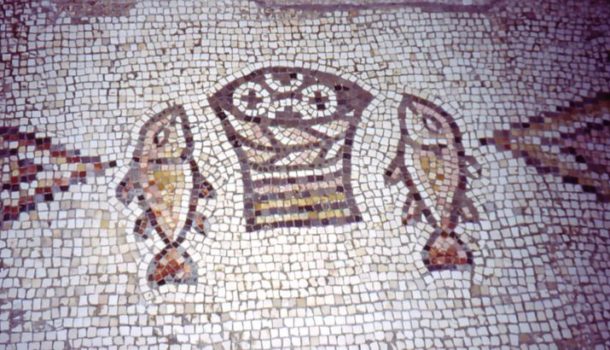
Tabgha | Where Jesus Fed the 5,000 | Touchpoint Israel

Grace, mercy, and peace to you from God our Father and from our Lord and Savior Jesus Christ. Amen.

Israel had been set free from slavery. They fled Egypt. Crossed the Red Sea. Their joy, however, quickly turned to grumbling. “Why did you bring us out into the wilderness only to die of hunger,” they cried out to Moses, and to God. Israel found themselves wandering in the wilderness feeling broken and feeble, hopeless, helpless, and hungry.

And yet, in his compassion, Christ provided for his people in the wilderness. Manna and quail rained down in abundance. 

Crowds of people fled their homes, villages, and towns. They came beside the Sea of Galilee hoping to see Jesus. To catch a glimpse, a word, a healing touch. And yet, they found themselves in a desolate place feeling broken and feeble, hopeless, helpless, and hungry.

And yet, in his compassion, Christ provided for his people in the wilderness. Five thousand men, plus women and children ate bread and fish in abundance. 

What about us? It may seem like we’re far from the wilderness, at least geographically speaking. Even in this pandemic we still have food to eat, clothes on our backs, shoes on our feet, and plenty of toilet paper. And yet, we find ourselves in the wilderness, in a desolate place. The wilderness of fear and uncertainty. The wilderness of disease and despair. The wilderness of sin and death. As we hear Matthew’s account of Jesus’ feeding the five thousand, we see ourselves in the Galilean crowds and the Israelites in the wilderness, feeling broken and feeble, hopeless, helpless, and hungry.

And yet, in his compassion, Christ provides for you, his people, in the wilderness. In spite of the way everything looks in this wilderness, Jesus saves you. Jesus provides for you. Not just for eternal life, but for this life too. Soul and body. Daily bread at your table and from his table in abundance. 

From beginning to end, this is a story about Jesus and how he provides for the people of God. 

When he went ashore he saw a great crowd, and he had compassion on them and healed their sick. 

“Had compassion” sounds rather ho-hum. No. Splanchnidzomai is the word. Jesus has a gut-wrenching, feel-it-in-your stomach compassion for the broken and feeble, the helpless, hopeless, and hungry. And for you. But compassion is more than a feeling for Jesus. It’s an action. He heals. Feeds. Later on he bleeds. Suffers. Dies. Rises. Forgives. That’s his compassion for you. 

Now when it was evening, the disciples came to Jesus and said, “This is a desolate place, and the day is now over; send the crowds away to go into the villages and buy food for themselves.” 

Now, it’s easy to be hard on the disciples. After all, it was evening. They were tired. Hungry. And no doubt asking themselves the same question this crowd and Israel long ago had asked. “Is this Jesus really the one God has sent to save us? How is he going to provide for us in the wilderness?” 

It’s a question that, no doubt, has crept into our minds a lot lately. Will this pandemic ever end? Will the insanity on the nightly news ever get better? Will kids ever return to school, and parents to work, and people to church? Will the Lord provide? Is Jesus really God come into the world to save us? Matthew’s answer is clear. Yes, Jesus will provide. Yes, in Jesus, God’s kingdom comes to you. But look at how he will provide.

It’s no accident that this story began with Jesus hearing the news of John the Baptist’s death. John’s death foreshadows Jesus’ death on the cross. But where John suffers innocently for the sake of the Kingdom of God, Jesus suffers innocently for your sake, to bring his kingdom to you. 

And isn’t that just like Jesus to go about his work of saving and healing and having compassion by doing it in the most unexpected, unimaginable kinds of ways. Dying on a cross to give you life. Becoming the disease of sin to heal you. Hungering and thirsting to give you eternally, satisfying food and drink in his own body and blood. Or, using poor miserable sinners and a meager fives loaves of bread and two fish to feed thousands. 

Jesus said, “They need not go away; you give them something to eat.” 17 They said to him, “We have only five loaves here and two fish.” 18 And he said, “Bring them here to me.”

The disciples look down at the bread and fish. Look out at the crowd and down again at the bread and fish. “That’s it? It’s not much. It’s not enough.” We come to our Lord the same way. Nothing in my hand I bring; simply to Thy cross I cling. Like the disciples, even our best works are meager. All I’ve got is Jesus’ Word and the blood of Jesus on the cross. And yet, Jesus will take our meager selves and use it all the same. Stuttering Moses. Denying Peter. Doubting Thomas. Fill in our names too. Five loaves. Two fish. Jesus loves taking the ordinary and filling it with his extraordinary grace.

In his compassion, Christ provides for you in the wilderness. Jesus ordered the crowds to sit down on the grass [do you hear Psalm 23 in the background?], and taking the five loaves and the two fish, he looked up to heaven and said a blessing. Then he broke the loaves and gave them to the disciples, and the disciples gave them to the crowds. 20 And they all ate and were satisfied. And they took up twelve baskets full of the broken pieces left over. 

Jesus piles on his compassion the way we stack up our thanksgiving dinner plates. All ate. And not just a little bit. All were satisfied. And not just satisfied. 12 baskets leftover. Doggy bags for everyone. A superabundance. In a word, grace. 

Jesus transformed that little Galilean hillside into a banquet table. A table that stretches all the way back to Exodus and all the way forward to the Lord’s Supper and even into eternity, to the marriage supper of the Lamb. In the evening, the Lord rained manna and quail. In the evening Jesus fed the crowds. On the night when he was betrayed, Jesus took bread, blessed it, broke it, gave it to his disciples and said. Take, eat. This is my body given for you.

From the Galilean hillsides to the hills of Milton, Edgewood, Fife, and Puyallup, Jesus feeds you. Forgives you. Pours out his compassion upon you. In abundance. In Jesus you are no longer broken and feeble, helpless, hopeless, and hungry. In Jesus’ death you have life. In Jesus’ compassion you have comfort. In Jesus’ feeding of the five thousand you have his promise that he will provide for you in body and soul. Jesus healed and then fed the crowds. Today, Jesus does the same for you in reverse, he feeds you and then heals you. In his compassion, Christ provides for you, his people, in the wilderness.

In the Name of + Jesus. Amen. The peace of God that surpasses all understanding will guard your hearts and minds in Christ Jesus. 

Monday, July 20, 2020

Sermon for Pentecost 7: "Parable of the Weeds"

+ 7th Sunday after Pentecost – July 19th, 2020 +
Series A: Isaiah 44:6-8; Romans 8:18-27; Matthew 13:24-30, 36-43
Beautiful Savior Lutheran
Milton, WA

What is the Meaning of the Parable of the Weeds? | Jesus Film Project


Grace, mercy, and peace to you from God our Father and from our Lord and Savior Jesus Christ. Amen.

Chances are that when you pick up a new book and look at the dust jacket or when a friend recommends a new show to watch on Netflix, you ask, “What’s the story about?”

Jesus’ parables are no different. A sower, a field, good seeds, wheat and weeds, enemies, servants, and harvest time. What’s this parable all about?

It is a story about many things: trust, patience, and the Lord’s deliverance; the problem of evil and the end times. For such a short parable, there’s quite a lot going on. 

But the thread that holds it all together is the Lord’s patience and mercy, his longsuffering. You O Lord, are a God merciful and gracious, slow to anger and abounding in steadfast love.

Keep those words in mind as our Lord explains the parable in more detail.

The kingdom of heaven is like a man who sowed good seed in his field. The man is the Son of Man, Jesus. The field is the world, and the good seeds are the sons of the kingdom.

25 but while his men slept, his enemy came and sowed tares among the wheat and went his way. 26 But when the grain had sprouted and produced a crop, then the tares also appeared.  Jesus tells us that the weeds are the sons of the evil one, and the enemy who sowed them is the devil. 

27 So the servants of the owner came and said to him, ‘Sir, did you not sow good seed in your field? How then does it have tares?’ 28 He said to them, ‘An enemy has done this.’ The servants said to him, ‘Do you want us then to go and gather them up?’ 29 But he said, ‘No, lest while you gather up the tares you also uproot the wheat with them. 30 Let both grow together until the harvest, and at the time of harvest I will say to the reapers, “First gather together the weeds and bind them in bundles to burn them, but gather the wheat into my barn.”  The harvest, Jesus says, is close of the age, and the reapers are the angels. Just as the weeds are gathered and burned with fire, so it will be at the close of the age.

The Son of Man will send out His angels, and they will gather out of His kingdom all things that offend, and those who practice lawlessness, 42 and will cast them into the furnace of fire. There will be wailing and gnashing of teeth. 43 Then the righteous will shine forth as the sun in the kingdom of their Father. He who has ears to hear, let him hear!

Jesus’ explanation sounds pretty straight forward. But did you notice that Jesus interprets every part of the parable with two notable exceptions? He tells us what everything means in the parable – sower, seed, field, weeds, enemy, harvest, and burn pile for the weeds. But Jesus says nothing about the servants or their questions to the farm owner. There’s a gap in Jesus’ interpretation.

This is the genius of Jesus’ storytelling in the parables. Jesus wants us to see ourselves in that gap. Not merely as someone who reads this parable casually, but to see ourselves as the servants/farm workers in the story. The servants ask: Sir, did you not sow good seed in your field? How then does it have weeds?’ 

It’s an age-old question. We’ve asked it ourselves many times. Why is there so much evil in the world? If God is good why does wickedness seem to run amuck? Why are there pandemics and riots and racism and such senseless violence? Why are police officers and 2 year olds being shot in our city streets? Why is the world full of so much suffering, pain, and cruelty. And the list of whys could go on. What’s going on, Lord? Why are there so many weeds? 

An enemy hath done this. Our Lord creates. The devil destroys. The Lord wants only to be gracious and merciful. The devil wants only chaos and death. Jesus sows good seed. The devil sows weeds. 

Jesus’ words are a sobering reminder that in this life, there is no utopia. For now we groan along with creation, as Paul says, and eagerly await the resurrection. For I consider that the sufferings of this present time are not worthy to be compared with the glory which shall be revealed in us. As we live in this world, or until Jesus comes again, this world is like the field of wheat and weeds, full of good and evil.

The servants ask the next logical question. ‘Do you want us then to go and gather up them up?’ So, what are we going to do about all these wicked weeds, Lord?”

The answer is a jaw-dropping, shocking surprise. “Let both grow together until the harvest.”  The Greek word there could be translated “let it be”, or permit it. It’s the same word used for forgiveness. What does our Lord say to do with all the wickedness in the world? Let it be for now. Forgive it. 

If it were up to us, if it were my farm, we’d probably burn it all down, pull up the weeds and wheat together and throw it all on the burn pile. See the problem? If we were in charge of the field, we’d have made a mess of it all a long, long time ago. If sinners were placed in charge of separating wheat from weeds, how would we know which is which and who is who? As Alexander Solzhenitsyn once said, “the line of good and evil runs through all our hearts.” 

So, what do we do about all the weeds? Ignore it all? No. Lament it. Call it for what it is. Repent of our own weedy, sinful hearts, and look to Jesus, the farm owner. He only sows good seed. And that’s exactly what he has done for you. He loves you. Forgives you. Shows mercy to you. He is patient, longsuffering.

Remember, this is a story about Jesus, the Sower, the Son of Man who came into the field of this world for you. He let all the weeds of the enemy surround him, lay ahold of him, and nail him to a tree. He bound himself to all the wickedness of our sinful, weedy hearts as and died in our place on the cross. And as he hung there for you, he endured the fiery furnace of God’s wrath that we might shine like the sun in the kingdom of our Father.

Remember the words of the Psalms: You O Lord, are a God merciful and gracious, slow to anger and abounding in steadfast love.

And that’s what this story is all about.

In the Name of Jesus. Amen. 

The peace of God which surpasses all understanding will keep your hearts and minds in Christ Jesus. Amen.

Monday, July 13, 2020

Sermon for Pentecost 6: The Parable of the Sower

+ 6th Sunday after Pentecost – July 12th, 2020 +
Series A: Isaiah 55:10-13; Romans 8:12-17; Matthew 13:1-25
Beautiful Savior Lutheran
Milton, WA

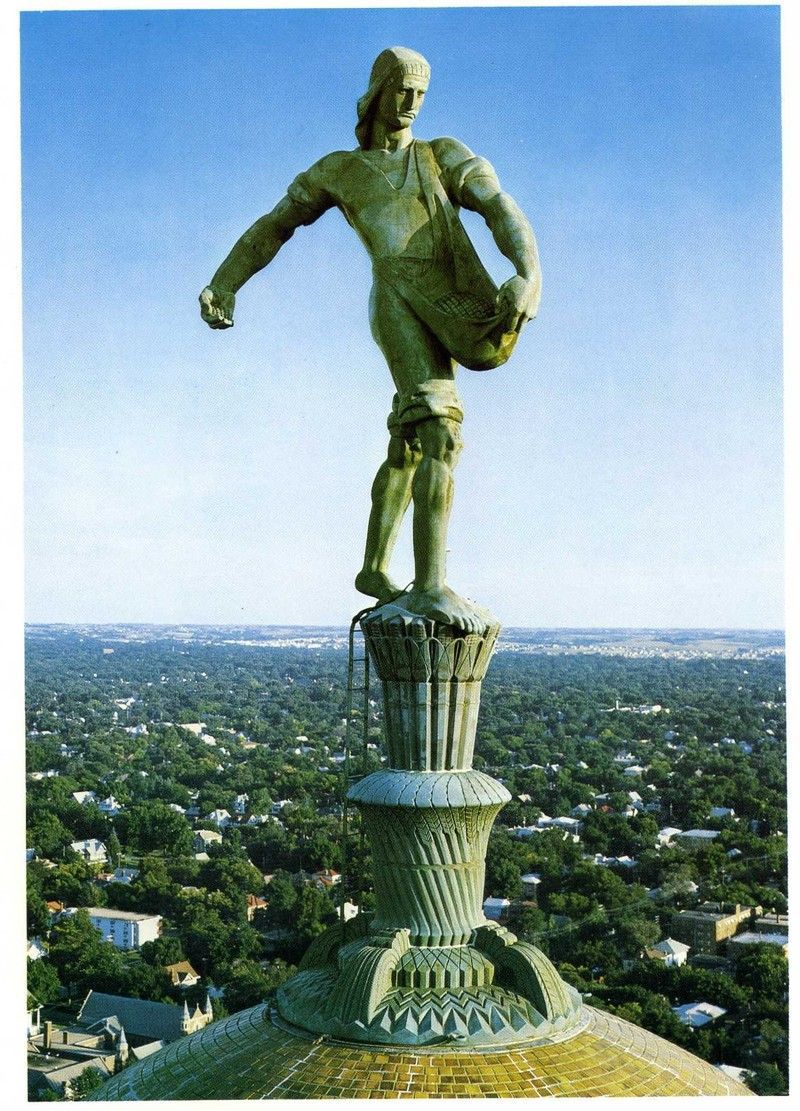
Capital City's statuary offers pleasing variety | Neighborhood ...

Grace, mercy, and peace to you from God our Father and from our Lord and Savior Jesus Christ. Amen.

Jesus spoke many things to them in parables.

If the Gospel of Matthew was a library, Matthew 13 would be the parable or the story telling section. Matthew 13 features some of Jesus’ most memorable parables: the parable of the weeds (stay tuned for that next week), the parable of the mustard seed and leaven, the parables of hidden treasure, a pearl, and a fishing net. It all starts with Jesus’ Parable of the Sower, the great watershed of all Jesus’ parables. It’s a beloved and familiar parable. So well-known in fact, that a statue of Christ the sower sits atop the state capitol in Lincoln, Nebraska.

And since we’ll be hearing parables over the next three weeks’ gospel readings, it’s worth spending a moment to unpack what is a parable. Jesus’ parables have been called many things: short stories with deeper meaning; earthly analogies of heavenly things. Jesus’ parables are earthly stories that point us to, or tell us something about, the greatest story of all: Jesus himself, his crucifixion and resurrection for you. That’s the key to this parable and all the parables. Jesus is at the center. The key to unlocking the mystery of the parables is to see Jesus crucified and risen at the heart of every parable.

Jesus taught in parables for a reason. When his disciples asked Jesus why he spoke in parables he answered this way: “He who has ears, let him hear.” And, I speak to them in parables, because seeing they do not see, and hearing they do not hear, nor do they understand.”

Jesus’ words present us with a paradox. On the one hand, He teaches in parables to communicate with those who do believe in him in ways that they will understand. “He who has ears to hear, let him hear.” These are the ears of faith that hear in Jesus’ parables the mystery revealed: that the reign of God is found in Jesus’ dying and rising. Ears attuned to the Word, listening for the voice of their shepherd.

On the other hand, Jesus teaches in parables to reveal that those who misunderstand his parables also misunderstand and reject him. They reject both the message and the messenger and so “hearing they do not hear and seeing they do not see.” It’s Jesus’ description of their unbelief.

Now, for a closer look at Jesus’ parable of the sower. Behold, a sower went out to sow. 4 And as he sowed, some seed fell by the wayside; 

Right away we know Jesus’ parable is about something other than agriculture. Most farmers or gardeners wouldn’t scatter precious seeds so abundantly and recklessly, all over pathways and rocky, weedy, thorn-filled soil. Go right for the good soil. But our Lord isn’t like most farmers. He spreads the seed abundantly, graciously. 

The seed is the Gospel of the kingdom. In a word the seed is Jesus, the promised Seed. He is both the message and the messenger. The Word of God incarnate who speaks the Word of God. The promised Seed and the Sower of the Seed of the Good News he bears and brings.

Remember Jesus’ words in John’s Gospel. That “Unless a grain of wheat falls into the earth and dies, it remains alone; but if it dies, it bears much fruit.” He was referring to His own death on the cross where He laid down His life for the life of the world. For your life too.

This parable also gives us a window into how Jesus works. It is so often contrary to what we expect. Consider his imagery of a seed. Think about how small a seed is, in some cases ridiculously small, compared to the plant that will grow. This is not how we would expect the Word of God to come. Something noisy or noticeable like a thunder clap or a divine fireworks display. But a small, insignificant little seed? And yet, that’s how our Lord works.

Jesus is the Seed, sown and planted within the womb of Mary. The Divine Sower himself became smaller than a mustard seed. So that he might grow and live for you and then be buried and planted in the earth for you, having died for you. And then out of the earth he rose for you to bring the fruit of his salvation for you, in you, and through you to others.

Still, the life of this Seed, of Jesus and his good news for us, is fraught with danger. 

Jesus warns us, this Good News is proclaimed in the harsh and hostile environment of this fallen world. a sower went out to sow…and the birds came and devoured them. This is the Evil One, Jesus says. A reminder that there is a spiritual war raging around us and in our own sinful flesh. And Satan would love nothing more than to snatch away this message of Good News that Jesus proclaims as quickly as a bird gathers seed. 

And yet, just like the birds that nibble a seed, swallow it and pass it out again, the devil has no power against the Word. For he is defeated. Crushed. Destroyed. Stripped of all power over sin and death by Jesus’ death in our place. Nobody – not the devil, not the world, not our own sinful flesh – can take you away from the love of Christ that will never let you go.

Some seed fell among the rocks. The shallow soil. Shallow hearing. Faith based on feelings is faith with no root, a shallow faith unable to endure the heat of persecution, hardship, and testing. This is what happens when our hearts or emotions become a barometer of God’s presence and the Spirit’s working. 

Some seed fell among the thorns. The thorns are the cares and concerns of this world and the deceitfulness of riches. Anxieties such as what will we eat, what will we wear, and so on. It’s always worth asking ourselves, what is choking my hearing and receiving of God’s Word?

And then there is the seed that falls on good soil, soil that has felt the blade of the plow. Broken and turned under soil. This too, just like the sowing of his Word, is all God’s doing. Our rocky, hearts of stone are plowed and turned over by God’s Word, and then the sower sows the seed. Recklessly. All over the place.

The Divine Sower casts the word of Jesus, the good news that in Jesus there is forgiveness, life, and salvation. That in Jesus there is no condemnation under the Law. That in Jesus there is peace and hope.

And the promise in all this is that Word of the Gospel, that Word who is Jesus, never returns empty but always accomplishes HIs purpose. Jesus indeed bears fruit in you. 

In the Name of Jesus. Amen. 

Monday, July 6, 2020

Sermon for Pentecost 5: "Jesus is Our Rest"


+ 5th Sunday after Pentecost – July 5th, 2020 +
Series A: Zechariah 9:9-12; Romans 7:14-25; Matthew 11:25-30
Beautiful Savior Lutheran
Milton, WA


Grace, mercy, and peace to you from God our Father and from our Lord and Savior Jesus Christ. Amen.

Come to me, all who labor and are heavy laden, and I will give you rest.

I think it’s safe to say that in one way or another, Jesus’ words hit home. As I read this text throughout this week, I couldn’t help but think of John Coffey, a character in Stephen King’s famous book, The Green Mile. As he sat on death row facing a death sentence of which he was innocent, he lamented:

“I'm tired, boss. Tired of being on the road, lonely as a sparrow in the rain. I'm tired of never having me a buddy to be with to tell me where we's going to, coming from, or why. Mostly, I'm tired of people being ugly to each other. I'm tired of all the pain I feel and hear in the world...every day. There's too much of it.” 
Come to me, all who labor and are heavy laden, and I will give you rest.

Jesus first spoke these words to his disciples in Matthew 11. Persecution was coming. They would be rejected. Even the great John the Baptist was imprisoned. No doubt they were tired physically, mentally, spiritually. 

Come to me, all who labor and are heavy laden, and I will give you rest.

If there’s been a common answer to the question, “How are you doing?” After we get through our token response of “I’m fine and doing good,” most of us will admit that we’re tired.

Tired of news and talk about COVID-19. Tired of unrest and injustice in our cities across the country. Tired of illness infecting our loved ones. Tired of turning on the news or scrolling through social media and seeing nothing but bad news. You’ve probably heard of compassion fatigue, now we have caution fatigue and even Zoom fatigue. The sense of weariness in the world is real. No doubt we’ve all felt it or experienced it these past few months. 

Come to me, all who labor and are heavy laden, and I will give you rest.

There’s another kind of weariness or fatigue that presses in and weighs us down. The burden of living in a broken, fallen world in broken, fallen bodies and minds. The weariness of our own sin. Of death itself. Scripture teaches us that sin is deadly, and it is. But it’s also exhausting. Draining. Physically, mentally, spiritually. As St. Augustine once wrote, “Our hearts are restless, O Lord, until they find their rest in Thee.”

This is what St. Paul is revealing for us in Romans 7:

18 For I know that nothing good dwells in me, that is, in my flesh. For I have the desire to do what is right, but not the ability to carry it out. 19 For I do not do the good I want, but the evil I do not want is what I keep on doing. 20 Now if I do what I do not want, it is no longer I who do it, but sin that dwells within me.
21 So I find it to be a law that when I want to do right, evil lies close at hand. 22 For I delight in the law of God, in my inner being, 23 but I see in my members another law waging war against the law of my mind and making me captive to the law of sin that dwells in my members. 24 Wretched man that I am! Who will deliver me from this body of death? 25 Thanks be to God through Jesus Christ our Lord! 
Come to me, all who labor and are heavy laden, and I will give you rest. Take my yoke upon you, and learn from me, for I am gentle and lowly in heart, and you will find rest for your souls. 30 For my yoke is easy, and my burden is light.”

There’s much to meditate upon in our Lord’s words. But in our weary world. In our tiredness of sin and death, Jesus’ words of rest are exactly what we need. Come to me, all who labor and are heavy laden, and I will give you rest.

What’s truly remarkable is how Jesus comes and gives us rest. He doesn’t wait for us to clean up our act and get right with God, “for while we were still sinners Christ died for us.” Jesus doesn’t require us to first be strong and then come to him, “for his grace is sufficient in our weakness.” Jesus came to save sinners, weary, tired, broken down, unable to help ourselves sinners. 

A bruised reed, He will not break. A smoldering wick, He will not snuff out. So, for those who have tried and are tired, for those who have denied and now doubt, for those who once cared but now cannot, Jesus is here; calling… lifting… carrying… you. All the way with him from his death on the cross through the grave, and up again into new resurrected life. It’s an exchange of cosmic and gracious proportions


On the cross Jesus takes our weakness and gives us his strength. Jesus takes our sin and gives us his perfect life. Jesus takes our despair, suffering, and pain, and gives us his peace, mercy, and healing. Jesus takes our death and gives us his life. Jesus takes our weariness and gives us rest in him.


Our rest is in Jesus. Jesus gathers about Him all who are burdened or broken. The downtrodden and the debilitated, the meek and the mourning, the despised, and the suffering, these are the ones Jesus gathers. Why? Because He is not going to rely on human wisdom or strength. In humble obedience, He accomplishes the will of His Father. 

Jesus did not come to win but to lose. He came to be beaten, to be broken, to be cast aside, and to die: For you. And then He rose again so you might know that no failure, no weakness, no sin, no suffering will ever separate you from your Father’s love. Your Savior has borne all sin, endured all suffering, that He might bring all God’s grace to all the weary of this world.

Come to me, all who labor and are heavy laden, and I will give you rest.

In the name of Jesus. Amen.

The peace of God which surpasses all understanding will keep your hearts and minds in Christ Jesus. Amen.