Monday, December 18, 2023

Sermon for Advent 3: "John in the Dock"

 + Advent 3 – December 17th, 2023 +

Series B: Isaiah 61:1-4, 8-11; 1 Thessalonians 5:16-24; John 1:6-8, 19-28

Beautiful Savior Lutheran Church

Milton, WA


In the Name of the Father and of the + Son and of the Holy Spirit. Amen.


“All rise. The Superior Court of the Jordan River Valley is now in session. The honorable LORD, judge of heaven and earth presiding.”


“The priests and Levites of Jerusalem versus John the Baptist, aka the Voice.”


“Will the prosecuting attorney please call their first witness to the stand?”

“Yes, your honor.”


“We call John the Baptist to the stand.”


“Please stand. Place your left hand on the scroll. Raise your right hand. Do you promise that the testimony you shall give in the case before this court shall be the truth, the whole truth, and nothing but the truth, so help you God?”


“I do.”


There was a man sent from God, whose name was John. He came as a witness, to bear witness about the light, that all might believe through him. He was not the light, but came to bear witness about the light.


To get to Christmas and Jesus, we go through John. Notice that he never seeks the spotlight. He is not the light. He is a witness to the light. John is a mirror. Jesus is the Light. John is the moon. Jesus is the Sun. John is the index finger. Jesus is the Lamb of God who takes away the sin of the world. John is the voice. Jesus is the Word made flesh.


John confesses Jesus, not himself. That’s why John is always a bit of an enigma. And his appearance certainly doesn’t help. John the ultimate hipster was uncool before it was cool to be uncool; he wore only custom made camel-skin clothing, ate local, non-GMO, grass-fed, organic, range-free locusts, and fair trade, cage-free wild honey. 


John’s strange look is accompanied by an even stranger message. Who does this guy think he is, telling us to prepare, repent, and make straight the way of the Lord?


“Who are you?” the Pharisees inquire. The wilderness becomes a courtroom. John is in the dock. 

And this is the testimony of John, when the Jews sent priests and Levites from Jerusalem to ask him, “Who are you?”  He confessed, and did not deny, but confessed, “I am not the Christ.”


John is a witness. A witness has one job: tell the truth about the person or event to which they are testifying. John declares that Jesus is the Christ, the anointed one, the long-expected Savior. The wilderness is ripe with messianic expectation, even if those expectations are misplaced and the Messiah is misunderstood. So, John confesses: I am not the Christ.


What then? Are you Elijah?


Though Jesus later would teach us that John came in the spirit of Elijah, preparing the way of the Lord, John bears witness again: I am not.

Are you the prophet? Are you the prophet greater than even Moses, foretold in Deuteronomy 18?

No.


Who are you? We have TPS reports to fill out. Headquarters is waiting. We need to know. What do you say about yourself?


I am the voice of one crying out in the wilderness, ‘Make straight the way of the Lord,’ as the prophet Isaiah said.”


That’s what John is. The voice. The messenger. John is a faithful witness. John prepares the way of the Lord. The Lord whom Isaiah said would be born of a Virgin and the root of Jesse. The Lord who is the righteous branch of David’s family tree and the Suffering Servant. The Lord who will preach good news, heal, and set the captives free. For John, the defense never rests. To the very moment his head is on a platter he’s pointing people to Christ. Even in death he is a faithful witness to Christ. 


John comes to us this Advent as he came that first Advent. In the wilderness, a dark place without Christ our light. That’s where John begins our advent preparation, in the wilderness…in the darkness. John calls us to confess with him. Confess that we are captive to sin and imprisoned by death. Confess that we have not honored the Lord’s name as we should, that our worship and prayers have faltered, that our love for God and others has failed, that our thoughts and desires are soiled with sin. Confess that we love to deny who we are as God’s baptized children. John calls us to confess and repent…and rejoice. For your Light is coming.


John’s witness to Jesus prepares us to witness His advent. 


So, John draws us out into the wilderness where your only life is where there is water. Jesus makes his way straight through the font to you. Your Baptism is Jesus’ advent. Your Holy Baptism is also Jesus’ witness to you. Your Baptism testifies that you are buried and raised with Jesus. Your life is hidden with Christ in water, and His word: You are forgiven. 


Christ the Light shines in your Baptism. The darkness of sin is banished and washed away by Jesus. No camels’ hair clothing for you. No, you’re clothed with the garments of salvation. Robed in Christ’s righteousness. Adorned as his pure, holy, and spotless bride.


John’s confession is also our confession. Who are you? Are you a child of Adam left to die in the wilderness?

No. I am baptized into Christ. Are you a voice crying out alone in the darkness of death? 

No, I am baptized into Christ. What do you say about yourself? I am baptized into Christ.


In this life, the church is like John. We are witnesses to the Light. We confess Christ, not ourselves. 


We are witnesses. We point to Jesus. We witness to Jesus when we support our preschool and care for one another with the love of Christ. We witness to Christ when we visit our friends, families, and members when they are in need. We witness to Jesus when we invite our friends and neighbors to church and bible study. We witness to Jesus when we share the witness of John in the lives of others: Behold the Lamb of God who takes away the sin of the world, for you.


And like John, the defense never rests. Confession is how we live in Advent. We confess the Creed. We confess and receive the Sacrament. We confess our faith as we sing. We seek to teach his word faithfully; to tell the truth, the whole truth and nothing but the truth. For we do not know when the court will adjourn.


But we do know the verdict. For you have an advocate with the Father, Jesus Christ the righteous one. Jesus intercedes for you. Jesus is your mediator.


Satan may be our accuser, but all of his evidence – and let’s face it, there’s plenty against us – it’s all thrown out of court. Christ the judge declares all of it inadmissible. Satan can accuse you no more. In Christ there is no condemnation. For the blood of Jesus covers all your sins. Jesus denies himself, and takes up your cross. Christ your judge steps down from his chair and takes your place. He allows the gavel to fall on himself instead of you. Christ the judge becomes your advocate. The innocent for the guilty so that the guilty would be made innocent. Jesus assumes the punishment for all your offenses. 


And yet He lives for you. Case closed. Court adjourned. You are free in Jesus. Rejoice! Go your way and bear witness to the Light.


In the Name of the Father and of the + Son and of the Holy Spirit. Amen.

Monday, December 11, 2023

Sermon for Advent 2: "Advent Redirection"

 + Advent 2 – December 10th, 2023 +

Series B: Isaiah 40:1-11; 2 Peter 3:8-14; Mark 1:1-8

Beautiful Savior Lutheran Church

Milton, WA


In the Name of the Father and of the + Son and of the Holy Spirit. Amen.


Between 1997 and 2008, the Detroit Red Wings hockey team won four Stanley Cup championships. One of the keys to their offense was a well-known play in hockey, the redirection. Centerman Tomas Holmstrom, would park himself in front of the opposing goalie and wait for a rocket of a slap shot from Defenseman Niklas Lidstrom. The puck would be deflected by the guy in front of the goalie, and with skilled redirection from the shaft or blade of the stick, the puck ended up in the back of the net.


Now, you’re probably thinking, great story, but what does hockey have to do with Advent and John the Baptist? In a word, redirection. 


Notice how Mark’s Gospel begins. The beginning of the gospel of Jesus Christ, the Son of God.


It’s not really Mark’s gospel, it’s Jesus’ gospel; it’s about him. Mark is simply the messenger. He redirects us right away to Jesus, the Son of God and the good news he brings. 


So too with John. He is the last of the Old Testament prophets and the first of the New Testament preachers. He is the herald and messenger that Isaiah and Malachi and the prophets would arrive on the scene to announce the arrival of the Messiah. John is the one sent to preach to all who came to be baptized by him and redirect their hearts and minds and ears to Jesus. John is the warmup act preparing us for the headlining band at the show. 


John is the arm and hand stretched out to announce that Jesus the Advent king and savior is here.

John is the finger pointing you to Jesus who has come with good news

John is the voice proclaiming a message of preparation, of confession of sin and forgiveness of sin.


And he preached, saying, “After me comes he who is mightier than I, the strap of whose sandals I am not worthy to stoop down and untie. 


John’s first words in Mark reveal that John is a master at redirection. He deflects the attention; he takes our eyes and ears off of him and onto Christ. Even though all of Judea and Jerusalem were going out to see and hear John in the wilderness, John redirects all who hear him away from himself and back to Jesus.


This is why we hear from John the Baptist so much in Advent. John’s preaching is a reminder that we focus on ourselves far too often. John redirects us away from our self, away from our selfishness, and away from our sin. Christ must increase; I must decrease. 


John also redirects another way. The people went out into the wilderness confessing their sin. So do we. To confess our sin is say what God says about our sin is true; to say the same thing God says. To say Amen. It’s true. I have sinned in thought, word, and deed. I have not loved the Lord with all my heart, soul, and mind…I have not loved my neighbor as myself. 


But then, like a blazing slap shot from the blue line, John breaks into the play and redirects us. Through John’s preaching God turns our ears, eyes, hearts and minds to Jesus. And when John turns, redirects us towards Jesus we see that he has not come to judge but to be judged in your place. Jesus has not come to punish, but to pardon you. Jesus has not come to rub your face in all your sin and guilt, but to redeem you from it. To redirect you forever away from sin, selfishness, and death, and points you to Jesus who is your savior, who set you free, liberates you, and forgives you in his death and resurrection. He is the one who is mightier than John and you and I. But he is also merciful.


How does he do it? In an ordinary, yet extraordinary gift. God’s Word and water and the Holy Spirit. 
I have baptized you with water, but he will baptize you with the Holy Spirit.”


John’s baptism in the wilderness was good. It forgave sin, the gospels tell us. But it was only a preparation for something greater, just like John himself. The Baptism Jesus gives not only forgives sin; he does more. He dies, rises, ascends, and then pours out the Holy Spirit as he promised. Again, by word and water. He gives the Holy Spirit. He makes you a child of God. He adopts you by grace. Baptism is your promise from God himself that you are already prepared for Christ’s coming because you are washed, baptized, cleansed, forgiven. 


And when you do sin, our Lord redirects you back to the promises he gave you by his Word, water, and the Holy Spirit. You are his new creation. You belong to him. You are a temple of the Holy Spirit, and it is he who, this Advent and every day until Christ returns, continually redirects you back to your forgiveness and life in Jesus. 


In the Name of the Father and of the + Son and of the Holy Spirit. Amen.

Monday, December 4, 2023

Sermon for Advent 1: "Making An Entrance"

 + 1st Sunday in Advent – December 3rd, 2023 +

Series B: Isaiah 64:1-9; 1 Corinthians 1:3-9; Mark 11:1-10

Beautiful Savior Lutheran Church

Milton, WA


In the Name of the Father and of the + Son and of the Holy Spirit. Amen.


Whenever our family goes to a baseball game, one of the things we enjoy – besides the game itself of course – is listening to and making comments about the players’ walk-up songs. We even play a little game debating the finer points of what makes a good walk-up song and what song we would choose if we were the ones approaching the plate. A Taylor Swift song? Johnny Cash? Guns N Roses? Kidzbop? Kenny Chesney? It’s a small, but important detail…it’s about making an entrance.


Today on this first Sunday in Advent the church is making an entrance into a new church year, a new season. Advent begins. Christmas is approaching. We’re longing for and praying for Christ’s promised return. And what’s our walk-up music for this first Sunday? How do we make an entrance into this Advent season? We hear it in today’s Gospel reading from Mark 11: 

And they brought the colt to Jesus and threw their cloaks on it, and he sat on it. And many spread their cloaks on the road, and others spread leafy branches that they had cut from the fields. And those who went before and those who followed were shouting, “Hosanna! Blessed is he who comes in the name of the Lord Blessed is the coming kingdom of our father David! Hosanna in the highest!”

Mark 11 is Jesus’ walk-up song to holy week, to his Thursday night Passover with his disciples, to the giving of the Lord’s Supper, to his betrayal, to his trial, beatings, and mockery he will endure, to his crucifixion, death, and burial. 


We’re used to hearing this Gospel reading on Palm Sunday as we enter into Holy Week. So at first it might seem like an odd thing to be hearing – what with all the lights and sounds of Christmas already around us everywhere. Why are we hearing about holy week when it’s beginning to look a lot like Christmas? There’s a good reason for it. In Advent we look backwards and forwards and we look around at the present. We look backwards and rejoice that Jesus made an entrance into our fallen world, that he came in the flesh to save us. To paraphrase an old saying, He came, He saw, he conquered death and sin on the cross for you. 


We also look forward to  Jesus’ second coming, his advent in glory on the Last Day. We long to see and hear the final walkup song of angels and trumpets and our Lord’s return. And while we wait, we look around at the present. Jesus comes to us, making an entrance into our lives and ears, hearts and minds by his holy word, by his holy supper, by gathering us together as his people around his gifts.


Because of all this, Advent is a season of preparation. Like John the Baptist standing in the wilderness preparing the way of the Lord, so too, the Advent season prepares us for Jesus to make an entrance now with his word and sacraments, and when he comes again in glory; he prepares us with humility, yet hope; with patience, yet trust in his promise; he calls us to repentance but also to rejoice. 


Yes, even in Advent we join the Palm Sunday crowds in singing Jesus’ walk-up song, as he makes his entrance still for us in his body and blood in the bread and wine. We sing those very same words.

“Hosanna! Blessed is he who comes in the name of the Lord Blessed is the coming kingdom of our father David! Hosanna in the highest!”

This song the crowds are singing is an ancient song. It is the walk-up song the prophets have been singing for centuries, preparing the way for the Messiah to make his entrance. Zechariah and Isaiah and God’s people sang it over the years of longing and expectation. Hosanna. Lord, save us. 

Hosanna is our Advent song too. This is the prayer of Advent, the prayer of our lives: Hosanna. Lord, save us. Too long have we sat in darkness. Too often have we entered into sin, and given into our own selfishness, and self-serving ways. The prophet Isaiah is right about us.     


in our sins we have been a long time, and shall we be saved? 
We have all become like one who is unclean,
    and all our righteous deeds are like a polluted garment.
We all fade like a leaf, and our iniquities, like the wind, take us away.


The truth is, we don’t deserve to enter into our Lord’s presence, and yet in his mercy, in his grace and lovingkindness, what does our Lord do? Jesus makes an entrance. He cues up the Old Testament walk-up song of salvation as he steps up to the plate, as he journeys to the cross for you. 

Hosanna! Blessed is he who comes in the name of the Lord Blessed is the coming kingdom of our father David! Hosanna in the highest!”

Jesus entered Jerusalem for you. He entered the upper room and broke the bread and poured the wine for you, declaring that this is his body and his blood for your forgiveness. And then to make sure of your eternal entrance into his kingdom he walked out of Jerusalem for you and entered into death in your place; he entered the tomb for you. And he rose again three days later for you. And so today, in Advent, and every day until Jesus returns, we enter into God’s house where Jesus enters our own lives with his word, water, body and blood.


For all the times you cry out, Lord, save us. Lord, have mercy; for all the times we’ve failed to cry out for mercy – our Lord Jesus made his Advent entrance in the manger and on the cross to save you. 


Jesus hears our Advent cry for mercy. He hears our Hosanna, Lord, save us. He hears. He remembers. And when he remembers, he acts. Jesus enters into our lives of loneliness, pain, suffering, guilt, sin, and death, and he takes it all upon himself, and he speaks a word that enters our hearts and minds: his word of forgiveness and peace and joy.


That is what he was doing when he entered Jerusalem back in Mark 11: entering Jerusalem to save you. This what he will do again when he returns in glory; he will make an entrance in glory so you will enter the new Jerusalem and join in the marriage supper of the Lamb. And this is what our Lord does for us today and every day as enter his gates with thanksgiving and his courts with praise. 

Hosanna! Blessed is are you who come in the name of the Lord Blessed is the coming kingdom of our father David! Hosanna in the highest!”

In the Name of the Father and of the + Son and of the Holy Spirit. Amen.


Monday, November 27, 2023

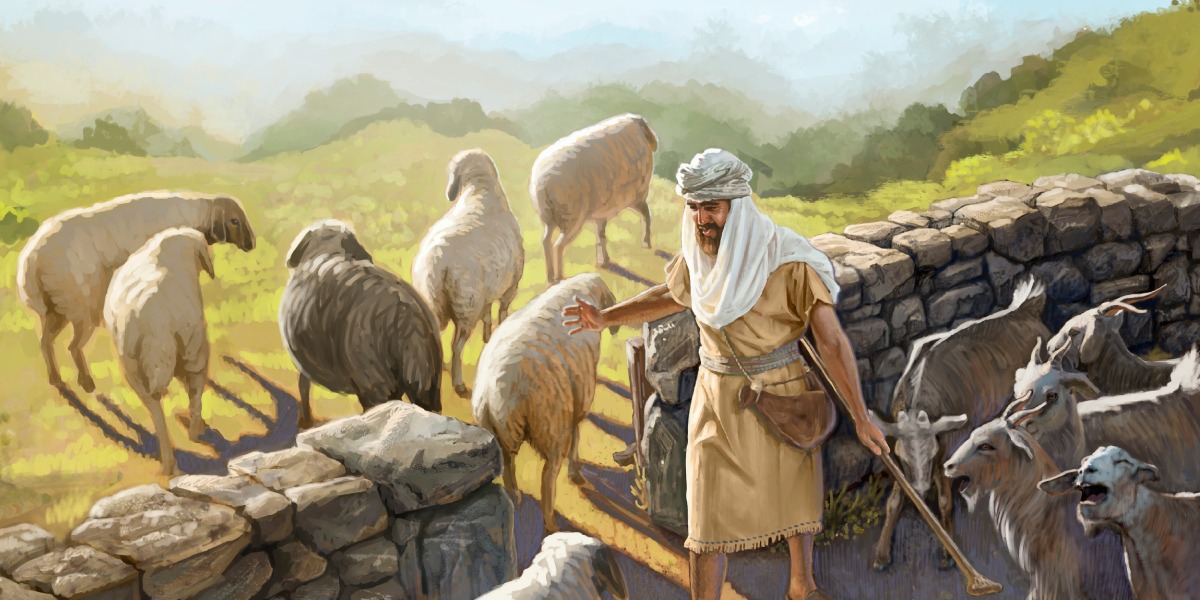
Sermon for the Last Sunday of the Church Year: "Sheep and Goats"

 + Last Sunday of the Church Year  - November 26, 2023+

Series A: Ezekiel 34:11-24, 1 Corinthians 15:20-28, Matthew 25:31-46

Beautiful Savior Lutheran

Milton, WA


In the Name of the Father and of the + Son and of the Holy Spirit. Amen.


Anytime you’re on social media you’ll see these links to click…take this quiz and find out what Disney princess you are, or what Marvel superhero you are like. We do the same thing when we read stories or watch movies…we find a way to imagine ourselves in the story. 


When we hear Jesus’ parable of the sheep and goats, as we did today on this Last Sunday of the Church year, I would guess many of us have that question in mind. We try and find ourselves in this parable of Jesus. Where am I in this story? Who am I, a sheep or a goat?


We’ve been hearing and singing about the Last Day these past several Sundays. We know that we’ve been living in the last days since Jesus’ birth, life, death, and resurrection for us. We know his return is promised in Scripture. We confess in the Creed that we look for the resurrection of the dead and the life of the world to come.


Still we hear Jesus’ parable in Matthew 25 and we wonder. Who am I?  So let’s take a closer look at Jesus’ parable of the sheep and goats and see what our Lord has to say.


When the Son of Man comes in his glory, and all the angels with him, then he will sit on his glorious throne. 32 Before him will be gathered all the nations


Before we even get to the separation or the judgment, there’s the resurrection of the body. It’s quite the scene Jesus paints here. The dead are raised. The living have put on immortality. One of my pastor friends served at a church that had a cemetery, and he would often say, if I am alive when Christ returns I hope I’m sitting right here on the steps overlooking the cemetery as the saints rise from the dead. 


The Last Day, Jesus says, is a day of revealing. And first he reveals who he is. He is the Lamb of God who takes away the sin of the world. He’s not simply the Savior of some but the Savior of the world. He is not simply the Good Shepherd of a select few but of the inclusive many. In His flesh, He embodies all, just as Adam embodied all into disobedience and death. When Adam fell, we all fell, and were born fallen in Adam’s fall. But Christ in His humanity is the second Adam, Adam 2.0, Adam set right before God. In the first Adam, you die, in the second Adam you live. In the first Adam you are condemned, in the second Adam you are justified and forgiven.


Then comes the separation. But notice something important. Jesus separates the sheep and the goats not on the basis of what they have done or not done, but rather who or what they are, sheep or goats.


The sheep are called “the righteous.” Counted. Reckoned. Declared. Covered in the righteousness blood of Christ the Passover Lamb. They’re placed on Jesus’ right, the place of honor. And their works are judged, it’s true. But they’re not judged by their works – but by Jesus’ works - his perfect life, his perfect death. The talk about works comes after the separation. First, Jesus blesses. “Come, you who are blessed by my Father, inherit the kingdom prepared for you from the foundation of the world.” 


Then there’s another surprise. Jesus reveals that he was hidden all along in the lives of his people. The phone call to a brother or sister in Christ who was sick, the clothing you gave, the food you brought when there was a death or illness in the family. Small, hidden, ordinary things…but that’s where Jesus hides himself.  “I was hungry and you fed me; thirsty and you gave me drink; a stranger and you welcomed me; naked and clothed me; sick and you visited me; in prison and you came to me.” 


The sheep are astonished. “When Lord? When did we see you hungry, thirsty, naked or in prison?” They had no idea that Jesus was hidden in the hungry, the thirsty, the stranger, the naked, the sick, and the prisoner. “As you did these things for the least of these my brothers you did it to me.” 


Again, it’s not about what they do but who they are. They simply did what needed to be done. Sheep don’t count what they’ve done. They don’t need to. Jesus has already counted them righteous, blessed by what he has done for them


Then there are the goats. Those on Jesus’ left. No inheritance. No blessing. Only dismissal. “Depart from me, you cursed, into the eternal fire prepared for the devil and his angels.” Notice that hell isn’t made for you or any human being; it’s for the devil and his minions. God’s will is that all would be saved in Jesus, that goats become sheep through the Lamb. 


The goats are surprised as well, but for a different reason. They were keeping track of all their good deeds.  They are as ignorant of their sin as the sheep were of their good works.  When confronted with their sin they do the faithless thing - try to justify themselves. “When did we see you hungry, thirsty, naked, a stranger, and did not help you? If we had only known we could have kept a record.”


This is why, in his book The Great Divorce, C.S. Lewis says that in the end, there are those who say to God, Thy will be done – as we pray in the Lord’s Prayer. And there are also those to whom God says, thy will be done. Those who wanted nothing to do with Jesus the Shepherd get not what they deserve but what they desire. Ok, have it your way.


So we come again to the question of the day. Who am I? When we look at ourselves in the revealing light of God’s Law, all we see is the face of a stinking, stubborn goat staring right back at us. Apart from Christ, outside of Jesus, that’s who we were. Lost and condemned creatures. Poor miserable sinners. Natural born goats.


But there’s another way to see yourself, to answer that question, who am I? It’s true that in Adam we are all goats, but in Christ you are made sheep. Dead in Adam. Alive in Christ. You are covered by the blood of the Lamb. After all, sheep don’t follow themselves; they look to their Shepherd. In Christ you are the people of his pasture and the sheep of his loving, pierced hands.


When Jesus tells this parable, remember that He who is the King and the Judge is also your Good Shepherd. “Behold I, I myself will search for my flock and seek them out. As a shepherd seeks out his flock when he is among his sheep that have been scattered, so I will seek out my sheep and I will rescue them…” 


What kind of shepherd thinks that the life of his sheep is more important than his own? What kind of shepherd, to save his sheep from being devoured, would throw his body between the sheep and the wolf? What kind of shepherd loves the least of his brothers so much that he would hang hungry, starved and naked as a prisoner in our sin and death?


Dear brothers and sisters in Christ, there is only one who has done all this for you, Behold the Lamb of God who takes away your sin. All of it. As he prayed to the Father in Gethsemane the night before his crucifixion, his sacrifice for you, he prayed, “Thy Will be done.” 


 “I am your Good Shepherd,” Jesus says “I know my sheep by name and I lead them out. For you who are hungry, I will feed you with my own body; take, eat. For you who are thirsty, I have thirsted on the cross; take drink, this is my blood poured out with forgiveness on your sin parched lips. Come, you who are blessed by my Father, inherit the kingdom prepared for you before the foundation of the world. You are no longer strangers here. You are no longer a goat. You have been set free from that pen. Your naked guilt is covered by pure Lamb’s wool, dipped in blood. And all that was once was scarlet is now white as snow.”


Who am I? Who are you? Christ our Lord tells you exactly who you are. Come, you who are blessed by my Father, inherit the kingdom prepared for you from the foundation of the world. You are his declared righteous, redeemed, rescued sheep. You are baptized and embraced forever in the arms of Jesus. That’s who you are now and forever.


In the Name of the Father and of the + Son and of the Holy Spirit. Amen.


Monday, November 20, 2023

Sermon for Pentecost 25: "The Parable of the Generous Master"

 + 25th Sunday after Pentecost – November 19th, 2023 +

Series A: Zephaniah 1:7-16; 1 Thessalonians 5:1-11; Matthew 25:14-30

Beautiful Savior Lutheran

Milton, WA


In the Name of the Father and of the + Son and of the Holy Spirit. Amen.


Before you pick up a new book or choose a show to watch, one of the first questions that often comes to mind is, “what’s this story about?”


We ask the same question when it comes to hearing and reading Jesus’ parables. What is this about?


Today as we hear another parable of Jesus from Matthew 25 that question is, no doubt, in our minds once again. If you only read the heading in your bible or skimmed the parable you might think it was about talents or coins. When you look at the other parables and teaching of Jesus in Matthew 24 and 25 you might think this is a parable about the end times, and it certainly is that. But mostly, like almost all of the parables, this story is about the Master. It’s about Jesus. It’s a story that reveals the kind of God he is…not a God we need fear in terror of judgment when he returns in glory, but one who is gracious, giving, trusting, and faithful. 


What is this story about? It’s a story that reveals the kind of God you have in Christ Jesus. 


Jesus begins the parable this way… There was a rich master who entrusted his wealth to three servants. To one five, to another two, and to a third one. They’re called talents…a word we use for something else (skill, ability, etc.). But in the parable, think of it as a coin or something similar. A talent was about 20 years’ wages. No small amount. But notice how the Master gives, he does so personally…to each according to his ability. And then, the master goes away. The first two servants double the amount given to them. But the third one dug a hole in the ground and hid it.


After a long while, Jesus goes on, the master returns to settle accounts. In Jesus’ parables, this is often the way he speaks about The Last Day. The day when the books are opened and the accounts are settled. The two who turned a profit are praised with a hearty “Well done” and get to share in the joy of their Master. The third is condemned to outer darkness with weeping and gnashing of teeth.

A quick reading of the parable makes it sound like this story is about God’s concern with the servant who has not invested God’s money. The first two servants invested His gifts. They brought Him both His money and a good return. The third servant buried God’s gifts and, therefore, has nothing more to share with God than what God originally gave him. “Here, you have what is yours” (verse 25). At first, we might read this and come away thinking that the parable reveals God to be a hard taskmaster about nothing more than profits and returns.

Yet, upon closer reading, that is not what this story is about. Investments and returns are considered something “little” to God (verses 21 and 23). God graciously gives these servants more and invites them to share in His joy. 

In the kingdom of God, the main character of the story isn’t you or me, it’s Christ. And in the kingdom of God, the story rests not on our works but Christ’s. In the kingdom of God, Jesus draws our attention to the kind of God he is. 

And that’s the source of conflict in Jesus’ parable. Pay close attention to how the third servant views his master. Why is he judged in the story? It’s not so much about what he did or didn’t do, but about how he saw or thought about his master…about the kind of God he thought the master was.

Listen to what he says, “Master, I knew you to be a hard man, reaping where you did not sow, and gathering where you scattered no seed, so I was afraid, and I went and hid your talent in the ground. Here, you have what is yours.’ 

This last servant sees the master as many see God: one who is hard, demanding, ungracious, and needs to be placated and feared. This third servant’s issue is that He doesn’t think God is good and the giver of gifts. This is why the third servant is called wicked, because he does not know the master rightly. In other words, he is wicked because he thinks of the master (God) not as good and gracious and giving, but as cruel and demanding. To him, God is not a giver, but a taker, a hard, cruel taskmaster. He makes demands but offers no help.


But this is not what the story is about. This is not the kind of God Jesus reveals, in this parable, or in his life and ministry. When you look at the opening of the parable, what kind of master do you see? Is the master harsh or demanding? Reaping where he did not sow? No. 


The parable reveals that God, the master, is just the opposite of that. He is good, gracious, generous and trusting. God gives various gifts to His servants, and He does so because He trusts they are able to use them. Jesus’ parable reveals a loving relationship of a God who gives and trusts us to use what he gives. The Master – Jesus – delights in giving. And the joy of the master is even seen in giving more. That’s his character. That’s who he is. 

When we approach this parable wondering - am I the servant he gave 5 talents to, or 2, or 1? Have I buried his gifts and possessions he’s given me? – we’ve approached the parable asking the wrong questions. It’s not a story about who you are as much as it is about who the Master is, and then who you are in relationship to him. This story is about Jesus our Master.

Remember the question that we began with. What is this story about? It’s a story that reveals the kind of God you have in Christ Jesus. In Jesus, you do not have the kind of God the third servant thought of, one who is cruel, hard, demanding. Rather, in Jesus, you have the God who is good and gracious and generous with his gifts to you. He gives you life and salvation in Jesus. He gives you gifts, abilities, the wealth of daily bread and the many and various abilities he gives to each of you, trusting you to use it for your good and the good of those around you. 


Do we fail at those callings in life? Yes. Do we always live up to our Father’s trust? No. But your faith rests not on what you have done or left undone, but on what Jesus has done for you. Your faith, like the faith of the first two servants, rests not on your coin and what you’ve done with it, but on the faithfulness of your Master Jesus. 


You are, as St. Paul says, not children of the darkness, but children of light. You are children of the day. You are beloved, baptized, redeemed, and forgiven. You belong to Jesus, the good and gracious and merciful Master. You are his servants, each with your own God-given gifts. Your God is Jesus. Your God is good and gracious and kind. You have the God who took a fisherman and made him a disciple. You have the God who took a tax collector and made him a Gospel writer. You have the God who took all our sin and failures and unfaithfulness and all our fears, doubts, worries, and death itself and he made all of that his own, making saints out of sinners. You have the God who was crucified for you, dead and buried for you. You have the God who was judged in your place so that when he comes again to judge the living and the dead, the verdict he gives you is the same he gave to the servants: “come, enter into the joy of your master.” You have the God who has destined you not for wrath but to obtain salvation through our Lord Jesus Christ, who died for us so that whether we are awake or asleep we might live with him.


Dear brothers and sisters in Christ, as you live in these last days. As you wait for Christ’s return. As you use the gifts God has given and entrusted to you, this is the kind of God you have…the God who holds you in his goodness and grace in Christ Jesus. 


In the Name of the Father and of the + Son and of the Holy Spirit. Amen.


Monday, November 13, 2023

Sermon for Pentecost 24: "The Bridegroom Comes"

 + 24th Sunday after Pentecost – November 12th, 2023 +

Series A: Amos 5:18-24; 1 Thessalonians 4:13-18; Matthew 25:1-13

Beautiful Savior Lutheran Church

Milton, WA


In the Name of the Father and of the + Son and of the Holy Spirit. Amen.


Whenever we turn the calendar to November, it seems as though a lot of events change with it. The clocks turn back. The weather takes a turn: rain and leaves are falling. The days are colder. Nights longer. You turn on the lights and the coffee pot earlier, more frequently.


In our Lord’s house, the church calendar and Scripture readings have taken a turn as well. Last week we celebrated All Saints’ Day. This week, and for the last weeks of November, the prayers, hymns and Scripture readings turn our attention to the End Times, the Last Day, to the day of Christ’s promised and glorious return.


For many, both in and out of the church, the end times tends to get rather sensationalized. You may even have said or thought to yourself in recent weeks, it sure feels like the end is near. Wars in Russia and Ukraine and Israel. Disasters. Tragedies. Persecutions. Plagues. Wickedness run amuck. If it feels like we’re living in the Last Days, that’s because we are. And we have been since Jesus’ death and resurrection. Today is one day closer to our Lord’s return.


When Jesus teaches us about the Last Day and his second coming, he does so not to create hype or hysteria, but to give us hope. For you who are in Christ crucified, that day is a day of joy, and we pray for it…come quickly, Lord Jesus. In readings like today’s from Matthew 25, our Lord prepares us to live not in fear but by faith in his promises.


In the Gospel of Matthew, Jesus’ teaching has taken a turn as well. At the end of today’s parable he says, “Watch therefore, for you know neither the day nor the hour.”

To prepare us for his coming again, Jesus tells us a parable. 


“Then the kingdom of heaven will be like ten virgins who took their lamps[a] and went to meet the bridegroom.[b] 2 Five of them were foolish, and five were wise. 3 For when the foolish took their lamps, they took no oil with them, 4 but the wise took flasks of oil with their lamps. 


Lamps and oil are common in the Scriptures. God’s word is a lamp to my feet and a light to my path, the Psalms remind us. Oil is used for healing, gladness, joy, and anointing; it is a gift that is given that marks you as one who belongs to God. Important details to remember later.


As the bridegroom was delayed, they all became drowsy and slept. 6 But at midnight there was a cry, ‘Here is the bridegroom! Come out to meet him.’ 7 Then all those virgins rose and trimmed their lamps. 8 And the foolish said to the wise, ‘Give us some of your oil, for our lamps are going out.’ 9 But the wise answered, saying, ‘Since there will not be enough for us and for you, go rather to the dealers and buy for yourselves.’ 10 And while they were going to buy, the bridegroom came, and those who were ready went in with him to the marriage feast, and the door was shut. 11 Afterward the other virgins came also, saying, ‘Lord, lord, open to us.’ 12 But he answered, ‘Truly, I say to you, I do not know you.’ 


Hearing Jesus’ parable of the wise and foolish virgins, we might be tempted to try and figure out which bridesmaid we are. To do that, we look at our jars of oil. Do we have enough? Have we done enough, loved enough, cared enough, been faithful enough? And when we look at ourselves and ask that question the answer is always going to be the same. No, I haven’t done enough. I don’t have enough. I’m not prepared enough. I am not enough. 


In Christ, your Bridegroom, the answer is always yes. In his death and resurrection for you there is always enough, more than enough. His body and blood overflowing with forgiveness. His word to be a lamp to your feet and a light to your path. His forgiveness sustains you and keeps you in. Jesus’ word and promise are enough. 


Rather than ask what kind bridesmaid we are, Jesus invites us to see the kind of bridegroom He is. He is the Bridegroom whose love will never grow weary, whose promise will always hold true. He loves us and is coming to meet us. Jesus your Bridegroom is coming with unquenchable love. Yes, the Bridegroom has been delayed, but He has not forgotten you His bride. The Bridegroom has been slow in coming, but His love for you has not declined. His grace will not run out for he is with you always. The Bridegroom has a steadfast love, and He will come with joy to gather you His people into an eternal celebration in His Kingdom.


The more we look at the Bridegroom, the more God assures us that His love is eternal, that Christ’s death and resurrection for you, Christ’s word and promise for you, Christ’s anointing of you in water and word is more than enough to prepare you for the day of his coming, and enough to keep you in Christ until that day. 


How do we prepare and wait and watch for Jesus the coming Bridegroom? We’re doing that right now this morning. You are in his house. At his feet. Hearing his word. Receiving his gifts. You do this when the light of his word fills your homes and family time as well. To be well prepared for Christ’s coming is to realize and rejoice that we have nothing of our own to cling to…but Christ the bridegroom.


When Christ returns…it is not for judgment – that’s already been done. Jesus the bridegroom was judged on the cross for you. At midnight comes the cry: Here is the bridegroom! Come out to meet him.


As the church calendar turns to these last Sundays of the church year, our Lord turns our eyes and ears, hearts and minds to our Lord’s return, we welcome and wait and watch for that day, knowing that when Jesus returns, he comes as your bridegroom.


He shines the light of his word into your ears creating, sustaining, and strengthening your faith in these last days. He has poured out the holy oil of water and word and the Spirit and marked you as his own; today and every day from now into eternity, you belong to him.


Jesus your Bridegroom is here. Come to meet him who meets you in this place with forgiveness. Pardon. Peace.


In the name of the Father and of the Son and of the Holy Spirit. Amen.